Toxicity prediction is one of the cornerstones of safety assessment in the development of new medicines and chemical compounds. From the early stages of R&D, understanding and anticipating potential adverse reactions is essential to reduce risks, avoid regulatory failure, and ensure project feasibility.
In general, the toxicity of a molecule is directly related to its pharmacokinetic properties (ADME — Absorption, Distribution, Metabolism, and Excretion) and to how it interacts with biological systems. Therefore, mastering the science behind toxicity has become an indispensable strategy for safe innovation.
Toxicity prediction and the limitations of traditional toxicology
Traditionally, toxicity assessment relied on extensive in vivo studies, which, on the one hand, contributed to scientific advances but, on the other, significantly increased time, costs, and ethical concerns related to animal use.
Moreover, many of these models have limitations when extrapolated to humans. As a result, the demand for more modern, efficient approaches aligned with current regulatory requirements continues to grow.
In silico methods applied to toxicity prediction
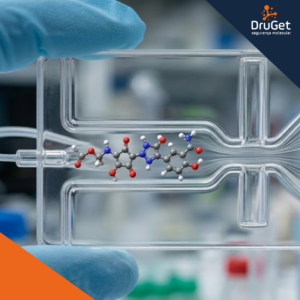
In this context, in silico toxicity prediction methods are revolutionizing how molecular safety is evaluated. By combining computational models, artificial intelligence, and robust databases, it is possible to predict toxicological risks even before laboratory testing.
A molecular analysis platform based on computational toxicity prediction enables strategic evaluations, such as:
- Prediction of toxicological properties: Estimates the potential for adverse effects and risks to human health.
- Prediction of pharmacokinetic properties (ADME): Assesses how a molecule will be absorbed, distributed, metabolized, and excreted, directly influencing its safety profile.
- Prediction of impurities and contaminants: Identifies, at an early stage, unwanted substances that may cause adverse reactions or regulatory issues.
Thus, researchers can select safer and more promising molecules from the very beginning of development.
Strategic impacts of toxicity prediction in R&D
The adoption of computational toxicity prediction delivers clear and measurable benefits.
First, it significantly enhances safety, as potential adverse reactions are identified early.
In addition, these approaches promote sustainability and ethics by reducing reliance on animal testing.
Consequently, there is a substantial reduction in costs and development time, since only the most viable candidates advance to complex experimental stages.
In summary, this represents a paradigm shift: less trial and error, more scientific strategy.
Toxicity prediction and molecular safety at DruGet
At DruGet – Molecular Safety, we provide specialized solutions for toxicity prediction, pharmacokinetic evaluation, and compound safety assessment through computational technologies and alternative methods.
Our goal is to support R&D teams in reducing regulatory risks, optimizing development, and making data-driven decisions, delivering customized technical reports with high scientific rigor.
Furthermore, our work is aligned with principles of excellence, responsibility, innovation, and animal welfare, ensuring that your research advances with maximum safety and regulatory compliance.