For decades, discussions about alternative methods have focused on one main question: how can science reduce or replace the use of animals in research?
Today, however, this question is becoming part of a much broader transformation.
Organoids, organ-on-a-chip systems, advanced cell models, artificial intelligence, and computational simulations are expanding the possibilities of nonclinical research. At the same time, regulatory agencies are developing new pathways to incorporate these technologies into drug development and safety assessment.
Therefore, a new question emerges: what happens when replacing animal testing becomes part of a broader transformation in the way we generate scientific evidence?
The answer may involve a change in paradigm. Instead of searching for a single alternative to each animal test, researchers can combine different technologies to build evidence that is more relevant to human biology.
From the 3Rs to New Approach Methodologies
The concept of the 3Rs — Replacement, Reduction, and Refinement — has guided strategies to replace, reduce, and refine the use of animals for decades.
In the European Union, for example, legislation establishes the full replacement of procedures involving animals as an ultimate goal whenever scientifically possible. In addition, the European Medicines Agency (EMA) supports the development and implementation of approaches aligned with the 3Rs.
Within this context, New Approach Methodologies (NAMs) have gained increasing attention.
The term covers a wide range of methods that can provide information about safety, toxicity, efficacy, or biological mechanisms without necessarily relying on traditional animal models.
These approaches include advanced cell systems, organoids, organ-on-a-chip technologies, and computational tools.
Therefore, this transition is not only an ethical issue. It also raises an important scientific question: can we develop models that better represent what we actually want to predict?
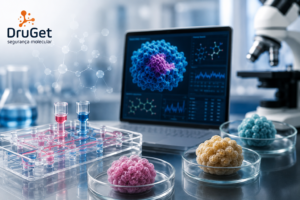
Organoids bring laboratory models closer to human biology
Organoids are among the technologies helping researchers answer this question.
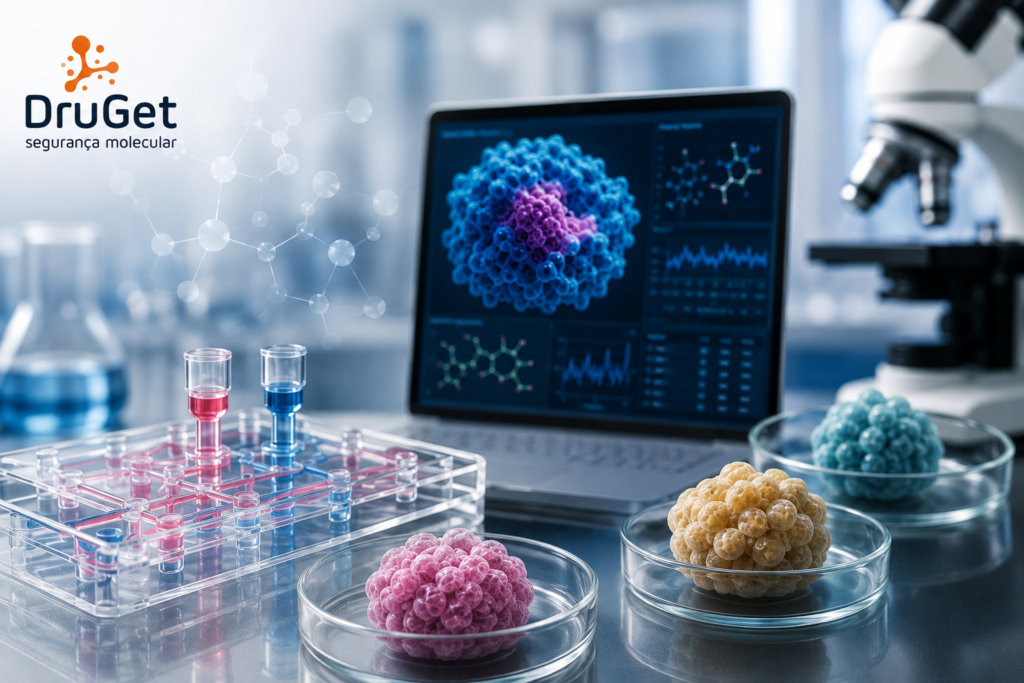
They are three-dimensional structures derived from cells that can reproduce certain characteristics of tissues and organs. Therefore, they offer a higher level of biological organization than conventional two-dimensional cell cultures.
Researchers can use these systems to investigate biological processes, disease mechanisms, and responses to different substances.
Furthermore, scientists can develop certain organoids from human cells. This creates opportunities to study responses that more closely reflect human biology.
However, organoids also have limitations. By themselves, they cannot reproduce the full complexity of an entire organism.
For this reason, the future will probably not depend on a single technology.
Organ-on-a-chip adds dynamics to experimental models
Organ-on-a-chip systems take a different approach.
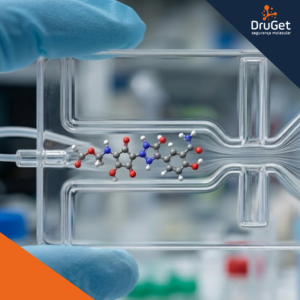
These devices aim to reproduce specific aspects of the physical and functional environment found in human tissues. To achieve this, researchers can combine cells with microchannels, fluid flow, mechanical forces, and other controlled conditions.
As a result, scientists can investigate phenomena that static cell cultures may represent only partially.
Moreover, more complex systems can connect different tissue or organ models. This possibility is particularly relevant because toxicity, metabolism, and pharmacological responses often depend on interactions between different organs.
Therefore, organ-on-a-chip technologies may help research move from isolated experiments toward more integrated experimental systems.
Where do computational methods fit in?
Not every experiment needs to take place in a physical system.
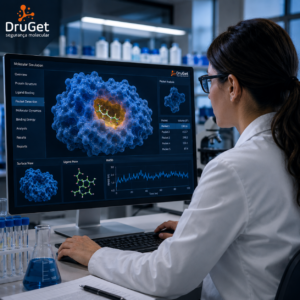
Computational models already allow researchers to predict chemical properties, investigate molecular interactions, and integrate large datasets.
Thus, in silico methods can complement organoids, cell cultures, and microphysiological systems.
Imagine, for example, that a computational model identifies a particular mechanism as a potential source of toxicity. Researchers can then select an appropriate cellular system to investigate that hypothesis.
Experimental results, in turn, can provide new data for computational models.
Consequently, a continuous cycle emerges:
prediction → experiment → data → refinement → new prediction.
This process reflects a broader trend toward integrating computational and experimental research.
Artificial intelligence can integrate different types of evidence
Artificial intelligence adds another layer to this transformation.
Machine learning models can process large volumes of biological and chemical data. Moreover, they can identify relationships that conventional analyses may overlook.
This ability becomes particularly important when different methods generate complementary information.
One experiment may provide cellular data. Another may evaluate metabolism. Meanwhile, a computational model may estimate molecular properties, while a microphysiological system may reveal a functional response.
In this context, AI can help integrate information and identify relevant patterns.
Consequently, the future of alternative methods may depend less on finding one perfect model and more on intelligently combining different sources of evidence.
The future may lie in integration
This shift is already visible in integrated assessment strategies.
The Organisation for Economic Co-operation and Development (OECD), for example, works with Integrated Approaches to Testing and Assessment (IATA).
These approaches can combine information from in vitro, in chemico, and in silico methods, omics technologies, existing data, and other sources. Researchers can then generate additional data when the available evidence does not adequately answer the scientific question.
This approach changes the traditional logic.
Instead of asking:
“Which test can replace this animal experiment?”
Researchers can begin asking:
“Which combination of evidence can best answer the question we need to solve?”
The difference may seem subtle. However, it represents a profound change in how scientists design nonclinical research.
Replacing animals does not mean replacing one model with another
One risk in this transition is assuming that a single technology can reproduce the full complexity of biology.
That will probably not be the case.
An organoid has advantages and limitations. The same applies to an organ-on-a-chip system, a computational model, or a conventional cell culture.
Therefore, different tools may answer different questions.
The real advance lies in understanding which method to use, for which purpose, and within which context.
As a result, replacement no longer needs to mean finding an artificial copy of an entire organism.
Instead, researchers can break down a complex problem and select the most appropriate tools for each part.
Validation remains a major challenge
Developing an innovative technology does not mean that regulators can immediately use it for decision-making.
First, researchers must demonstrate that the method produces reliable results within a clearly defined context of use.
Reproducibility, robustness, biological relevance, and predictive performance are among the factors that require careful evaluation.
This issue has become even more important in recent years.
In 2025, the U.S. Food and Drug Administration (FDA) announced a roadmap to reduce animal testing in preclinical studies and expand the use of human-relevant approaches. The technologies highlighted by the agency include computational models, organoids, and organ-on-a-chip systems.
Furthermore, in 2026, the FDA published draft guidance addressing general considerations for the use and validation of NAMs in drug development.
Therefore, the next challenge is not only technological.
It is also regulatory.
FDA — New Approach Methodologies (NAMs)
Regulatory acceptance is moving forward
Regulatory agencies are also creating mechanisms to increase confidence in NAMs.
In September 2026, the EMA launched a pilot program for the voluntary submission of data related to New Approach Methodologies.
The initiative allows companies, method developers, research organizations, and academic laboratories to submit data and receive feedback on the regulatory maturity of their methods.
This step addresses an important challenge. Regulators need high-quality data to understand how well these technologies perform and where they can reliably support decision-making.
Therefore, bridging the gap between scientific innovation and regulatory application will be essential for broader adoption.
A method must do more than work in an individual laboratory.
It must generate evidence that is sufficiently reliable to support decisions.
What comes after replacement?
Perhaps this is the most interesting question.
If science progressively reduces its dependence on animal models, the next goal should not simply be to declare that suitable replacements have been found.
Instead, we should aim for better models.
Models that are more relevant to humans.
More mechanistic.
More reproducible.
More integrated.
And, above all, models that are appropriate for the scientific question being asked.
Therefore, the future may not belong to one revolutionary technology. It may emerge from the integration of human biology, microphysiological systems, organoids, computational methods, artificial intelligence, and experimental data.
From alternative methods to a new nonclinical science
For many years, researchers have described these technologies as “alternatives” because animal models occupied a central position in experimental strategies.
However, this terminology may eventually change.
As NAMs gain scientific maturity and regulatory acceptance, some of these technologies may no longer function merely as alternatives. In specific contexts, they may become part of the primary strategy for generating scientific evidence.
Therefore, the goal is not simply to conduct the same science without animals.
The broader goal is to build a scientific framework capable of developing better models, integrating different types of evidence, and generating predictions that are more relevant to humans.
From this perspective, replacing animal testing does not represent the end of a scientific transformation.
It may only be the beginning.