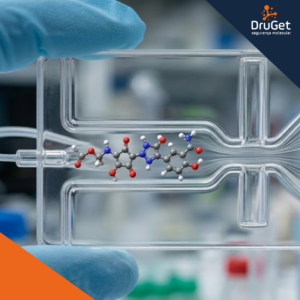
Nanotechnology has already transformed several industries, from cosmetics and electronics to advanced drug delivery systems. However, as scientists develop new nanomaterials, an important question arises: how can we assess their potential effects on human health and the environment?
In this context, computational nanotoxicology offers new possibilities. This field combines toxicology, computational modeling, nanoinformatics, and artificial intelligence (AI) to investigate how the properties of nanomaterials may influence their biological effects.
Moreover, in silico methods can analyze large amounts of data and help researchers prioritize materials for experimental testing. As a result, scientists can identify potential risks earlier and better guide safety studies.
Recent reviews highlight the growing role of these computational approaches in nanomaterial safety assessment. Importantly, these methods complement rather than replace traditional experimental approaches [1–3].
What Is Computational Nanotoxicology?
Computational nanotoxicology uses mathematical and computational models to study the relationships between nanomaterial properties, exposure, and potential biological effects.
For this purpose, models can consider factors such as size, shape, chemical composition, surface charge, solubility, aggregation state, and other relevant properties.
Researchers then connect this information with biological outcomes observed in experiments. In this way, they can develop models that estimate how new materials may behave.
However, nanomaterials present unique challenges. Their behavior depends on more than chemical composition alone. Size, surface properties, coatings, aggregation, and transformations within biological environments may also alter their activity.
Therefore, safety assessment requires approaches that can integrate multiple types of information [1–3].
Why Do We Need to Evaluate Nanomaterial Toxicity?
The same properties that make nanomaterials attractive for technological applications may also influence how they interact with biological systems.
For example, nanoscale particles have a high surface-area-to-volume ratio. In addition, depending on their characteristics, some nanoparticles may interact with cell membranes, proteins, and other biological structures differently from conventional materials.
Therefore, chemical composition alone is not sufficient to determine nanomaterial safety.
Distribution and Interaction With Biological Barriers
Depending on their size, composition, surface properties, and route of exposure, some nanomaterials may reach different tissues and biological compartments.
In this context, understanding their absorption, distribution, and elimination is essential for characterizing exposure.
Furthermore, the formation of a protein corona around nanoparticles can alter their behavior in the body. Consequently, the biological identity of a nanoparticle may differ from its original state before contact with biological fluids.
Oxidative Stress
Oxidative stress is another mechanism frequently investigated in nanotoxicology.
Some nanomaterials may promote the formation of reactive oxygen species (ROS). When ROS production exceeds the antioxidant capacity of cells, damage to lipids, proteins, and genetic material may occur.
As a result, researchers investigate oxidative stress as one of the mechanisms associated with several toxicological outcomes following nanomaterial exposure [2,3,5].
Inflammation and Pulmonary Toxicity
The inhalation route also requires special attention.
Certain inhalable nanomaterials may reach deep regions of the respiratory system. Depending on their properties and the level of exposure, they may trigger inflammatory responses.
In addition, studies involving specific nanomaterials, including some carbon nanotubes, have investigated possible associations with persistent inflammation and fibrotic changes.
However, these effects cannot be generalized to all nanomaterials. Toxicity depends on the specific properties of the material, as well as the dose, duration, and route of exposure [2,4,5].
How Does Computational Nanotoxicology Help Predict Risks?
Traditionally, toxicological assessment relies on a combination of in vitro and in vivo experimental studies.
However, the growing number of new nanomaterials makes it difficult to evaluate every possibility using experimental methods alone. At the same time, there is increasing demand for strategies that reduce animal use and make safety assessment more efficient.
In this context, in silico methods provide an important opportunity.
Computational nanotoxicology integrates physicochemical and biological data to identify patterns associated with specific effects. Consequently, these models can help prioritize materials, select relevant experiments, and support safer development strategies [1–3].
Nano-QSAR and Machine Learning
One of the main applications of computational nanotoxicology involves Nano-QSAR models. These models adapt Quantitative Structure–Activity Relationship (QSAR) approaches to nanomaterials.
Nano-QSAR models connect material properties with known biological responses. For example, they may consider size, composition, surface charge, and other relevant descriptors.
In addition, machine learning algorithms can explore complex relationships among these variables. As a result, they may identify patterns that conventional statistical methods do not easily detect.
Recent studies highlight the potential of these approaches for classification, prioritization, and environmental risk assessment of nanomaterials [1–3].
Artificial Intelligence and Omics Data
The integration of artificial intelligence with omics data represents another promising area.
Transcriptomic experiments, for example, can measure changes in the expression of thousands of genes after exposure to a material. However, interpreting such a large amount of information is challenging.
In this context, machine learning algorithms can reduce data complexity and identify signatures associated with specific biological responses.
For example, a study published in Nanoscale Horizons demonstrated a strategy for condensing transcriptomic information into a predictive variable related to toxicological response. Therefore, this approach may help researchers prioritize materials for further investigation [4].
Molecular Dynamics, Docking, and Quantum Methods
Molecular modeling can also help researchers understand interactions between nanomaterials and biological systems.
Molecular dynamics simulations, for example, can investigate interactions between surfaces, membranes, proteins, and other biological components at the molecular level.
In contrast, quantum chemistry methods such as Density Functional Theory (DFT) can provide information about electronic properties and chemical reactivity.
In addition, molecular docking may be useful in specific contexts to investigate interactions between components of nanosystems and molecular targets.
However, these methods do not provide a single solution for nanotoxicity assessment. Instead, each technique provides a different type of information. Therefore, researchers can combine their results with experimental data and other computational models [2,3].
PBPK Modeling and Nanomaterial Behavior in the Body
Another important computational approach is Physiologically Based Pharmacokinetic (PBPK) modeling.
PBPK models mathematically represent different organs and tissues. Therefore, they can simulate how a substance moves through the body over time.
For nanomaterials, however, researchers need to adapt these models. Processes such as cellular uptake, tissue distribution, dissolution, and elimination may differ from those observed for small molecules.
Nevertheless, PBPK models can integrate experimental data and explore different exposure scenarios. Consequently, they contribute to a broader understanding of nanomaterial biodistribution [2,3].
Computational Nanotoxicology and Safe-by-Design
One of the most promising applications of computational nanotoxicology is the Safe-by-Design concept.
In a traditional development process, researchers may discover safety problems only after they have produced and tested a new material.
Safe-by-Design follows a different strategy. In this approach, researchers consider safety from the earliest stages of development.
For example, computational models can compare different surface properties, particle sizes, compositions, or coatings before researchers select the final material.
As a result, development teams can prioritize alternatives that combine technological performance with a more favorable safety profile.
Furthermore, this strategy can reduce unnecessary experiments and direct resources toward the most promising materials.
Can Artificial Intelligence Replace Experimental Testing?
Not yet.
Despite recent advances, computational models depend heavily on the quality of the data used for their development and validation. Moreover, the enormous diversity of nanomaterials makes it difficult to create models that apply universally.
Therefore, researchers should integrate in silico methods with appropriate experimental approaches.
In this context, artificial intelligence primarily acts as a decision-support tool. For example, AI can help prioritize materials, generate hypotheses, and identify potential risks before more complex experiments begin.
Consequently, combining computational and experimental methods can make safety assessment faster, more rational, and more efficient [1–3].
The Future of Computational Nanotoxicology
The rapid growth of nanotechnology requires new strategies to evaluate an increasing number of materials.
In this context, artificial intelligence, machine learning, Nano-QSAR, omics data, and molecular modeling provide valuable tools for organizing information and generating predictions.
Furthermore, advances in nanoinformatics may support the development of more standardized databases. Better-quality data, in turn, can lead to more robust and reliable predictive models.
Finally, integrating data science with toxicology can strengthen Safe-by-Design strategies. In this way, safety becomes part of nanomaterial development from the beginning rather than an assessment performed only at the end of the process.
Therefore, computational nanotoxicology does not eliminate the need for experimentation. Instead, it helps make experiments more targeted, informative, and efficient.
How Can DruGet Support Nanomaterial Safety Assessment?
The growing complexity of nanomaterials requires approaches that can integrate multiple types of data and support decisions during the early stages of development.
In this context, computational toxicology tools can help identify alerts, analyze relevant properties, and prioritize candidates for experimental evaluation.
Furthermore, combining in silico methods with toxicological expertise can support more efficient safety assessment strategies.
At DruGet, we use computational approaches to support R&D teams in predictive candidate assessment and the early identification of potential risks.
Therefore, our goal is to contribute to a more rational, efficient, and evidence-based development process.
References
[1] Li, Y. et al. Computational Nanotoxicology Models for Environmental Risk Assessment of Engineered Nanomaterials. Nanomaterials, 2024.
[2] Sharma, S. et al. In silico Nanotoxicology: The Computational Biology State of Art for Nanomaterial Safety Assessments. Materials & Design, 2023/2024.
[3] Khan, T. et al. An Insight into In Silico Strategies Used for Exploration of Medicinal Utility and Toxicology of Nanomaterials. Computational Biology and Chemistry, 2025.
[4] Muratov, V. et al. TRIumph in Nanotoxicology: Simplifying Transcriptomics into a Single Predictive Variable. Nanoscale Horizons, 2025.
[5] Comprehensive Insights into Mechanism of Nanotoxicity. PubMed Central, 2024.