The race to discover new therapeutic compounds — whether drugs, nutraceuticals, or cosmetics — increasingly demands precision, speed, and safety. In this competitive landscape, computational analysis applied to drug development is emerging as an indispensable technological solution within Research and Development (R&D).
By leveraging data-driven predictive models, it becomes possible to anticipate critical molecular properties — such as pharmacokinetics, toxicity, and therapeutic efficacy — even before reaching the lab stage. In other words, this approach, known as in silico prediction, is transforming the way pharmaceutical products are developed.
Computational Analysis (In Silico Predictions): Advanced Technology from the Very Start of R&D
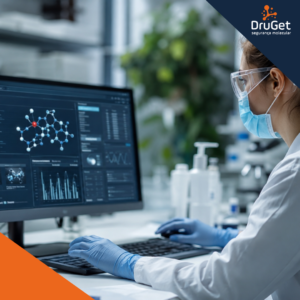
Computational (in silico) analysis uses artificial intelligence, machine learning, and molecular modeling to predict compound behavior with a high degree of accuracy. Moreover, this technology offers competitive advantages from the earliest stages of a project. Let’s explore how it works in practice:
1. Pharmacokinetic Prediction (ADME)
Computational models simulate how a compound will be Absorbed, Distributed, Metabolized, and Excreted (ADME) by the body. As a result, it is possible to:
-
Identify early molecules with low bioavailability;
-
Avoid progression of compounds with a risk of toxic accumulation in tissues;
-
Consequently, reduce laboratory costs and accelerate the selection of viable candidates.
2. Predictive Toxicology: Risk Assessment Before Testing
By using validated databases and intelligent algorithms, it becomes feasible to predict in advance:
-
Mutagenic, carcinogenic, or hepatotoxic potential;
-
In addition, regulatory risks that may delay or halt the project;
-
Toxicity profiles that directly impact product safety.
Therefore, these analyses support faster decision-making, reduce rework, and help focus investments on the most promising candidates.
3. Therapeutic Efficacy and Target Interaction
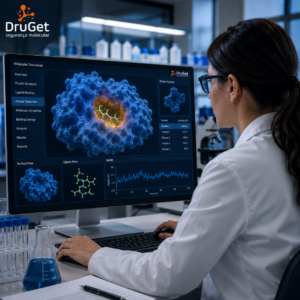
Tools such as molecular docking and molecular dynamics simulate, in real time, a compound’s interaction with its therapeutic targets. This allows for:
-
Accurately estimating binding affinity;
-
Prioritizing compounds with higher pharmacological potential;
-
Thus, increasing the likelihood of success in later clinical stages.
Strategic Advantages: Cost Reduction and Process Acceleration
By integrating in silico prediction from the project’s outset, companies can:
-
Minimize failures in clinical trials, which represent the highest costs in development;
-
Furthermore, streamline the screening of promising compounds with greater accuracy;
-
As a result, save financial and human resources through more informed decision-making.
In a market where innovation and regulatory compliance must go hand in hand, these advantages become critical to success.
DruGet: Your Innovation Partner in Bioactive Compound Development
At DruGet, we apply advanced computational prediction methodologies to streamline the development of bioactive compounds. With that, we offer:
-
Pharmacokinetic and toxicity modeling with regulatory focus;
-
Molecular simulations for therapeutic efficacy and target interaction;
-
Customized reports to guide science-based decisions, reducing risks and accelerating time-to-market.
Want to reduce costs and speed up your R&D pipeline?
Talk to our team and discover how DruGet’s solutions can transform your projects with innovation, efficiency, and safety.