Categoria: In Silico

  • O Futuro da Toxicologia Preditiva: a Revolução da Próxima Década
    O Futuro da Toxicologia Preditiva: a Revolução da Próxima Década

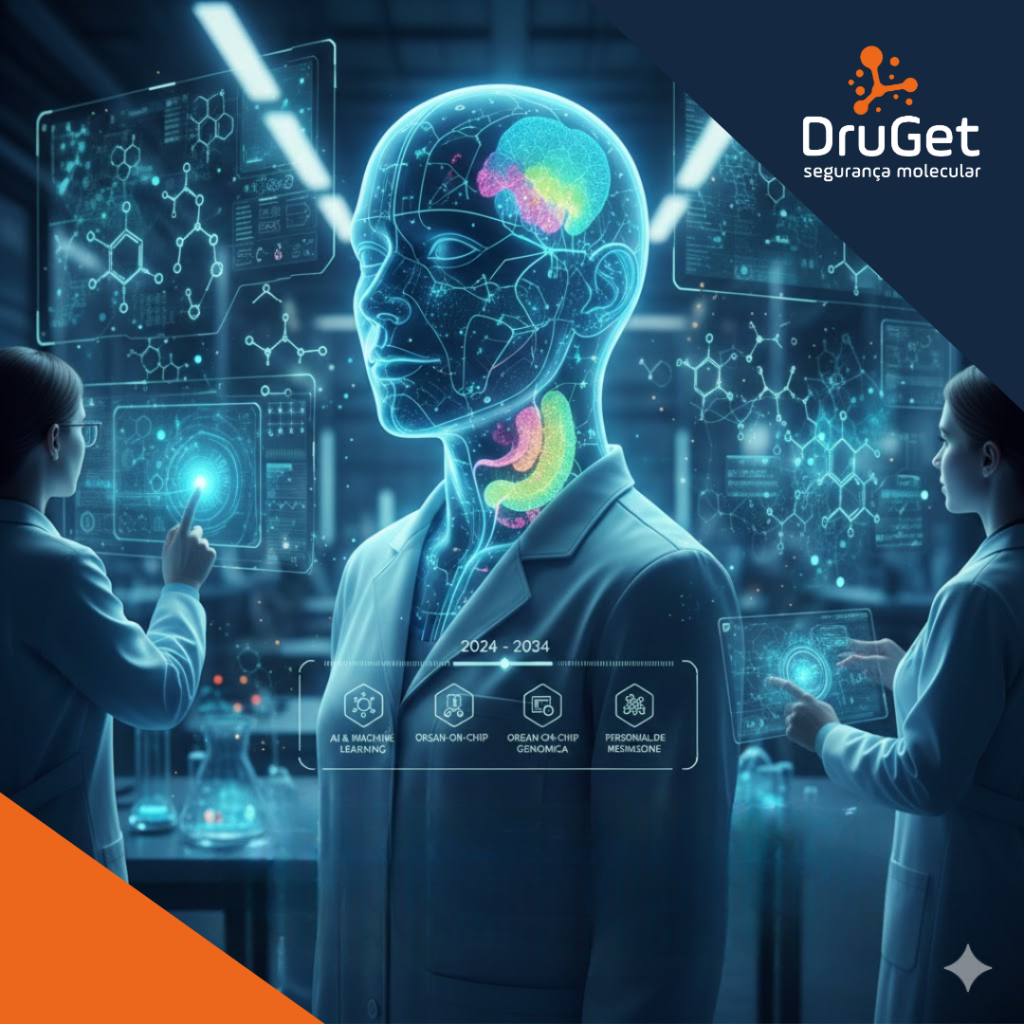
    Atualmente, a toxicologia preditiva — situada na intersecção entre biologia, ciência de dados e Inteligência Artificial (IA) — deixou de ser apenas uma promessa científica. De fato, ela já se consolidou como um dos principais pilares da segurança química moderna. Nos próximos dez anos, entretanto, não veremos apenas sua expansão, mas sim uma transformação profunda na forma como riscos são avaliados e moléculas são priorizadas, desde o laboratório até a prateleira.

    Diante desse cenário, compreender as tendências que moldarão o setor é essencial. A seguir, apresentamos as cinco principais tendências da toxicologia preditiva até 2034.

    1. Toxicologia Preditiva e Inteligência Artificial (Machine Learning): do Big Data à decisão automatizada

    Inicialmente, o grande motor dessa revolução é a capacidade de processar volumes massivos de dados. Enquanto métodos tradicionais exigem anos de experimentação, os modelos de Machine Learning (ML) analisam propriedades químicas, dados toxicológicos e registros clínicos em segundos.Assim, torna-se possível prever respostas tóxicas com uma precisão inédita. Como resultado, ocorre uma redução significativa da dependência de ensaios in vivo.
    Além disso, redes neurais profundas e plataformas de Next Generation Risk Assessment (NGRA) já automatizam a identificação de potenciais efeitos adversos, muitas vezes antes mesmo da primeira síntese química.

    2. A era ômica e a extrapolação In Vitro–In Vivo (QIVIVE)

    Atualmente, a fronteira da toxicologia não é apenas identificar se uma substância é tóxica, mas entender por que ela é tóxica. Nesse contexto, a integração de dados de genômica, transcriptômica e metabolômica permite visualizar impactos moleculares em tempo real.

    Além disso, por meio de modelos quantitativos de extrapolação in vitro–in vivo (QIVIVE), é possível traduzir resultados obtidos em sistemas experimentais para cenários fisiológicos humanos. Dessa forma, mecanismos de ação antes invisíveis aos testes convencionais tornam-se claramente identificáveis.

    3. Ética, ciência e regulação: o declínio dos testes em animais

    Historicamente, os testes em animais foram o padrão ouro para avaliação de toxicidade. No entanto, a pressão por métodos alternativos deixou de ser apenas ética e passou a ser também científica e regulatória.

    Atualmente, alinhada às diretrizes da OCDE e às New Approach Methodologies (NAMs), a toxicologia preditiva substitui progressivamente os ensaios animais por modelos computacionais e sistemas in vitro avançados, como Organ-on-a-Chip.
    Assim, a ciência avança em harmonia com as demandas regulatórias e sociais, promovendo avaliações mais rápidas, reprodutíveis e sustentáveis.

    4. Um mercado em rápida expansão

    Os dados de mercado confirmam essa tendência. Segundo projeções recentes, o mercado global de toxicologia preditiva baseada em IA deve crescer a uma taxa anual superior a 29% até 2032.

    Esse crescimento ocorre, sobretudo, porque indústrias farmacêutica, cosmética e agroquímica precisam reduzir custos bilionários associados a falhas tardias. Além disso, há uma demanda crescente por acelerar o time-to-market de novos produtos sem comprometer a segurança regulatória.

    5. Desafios críticos para a consolidação da toxicologia preditiva

    Apesar dos avanços, alguns desafios ainda precisam ser superados para que a toxicologia preditiva atinja todo o seu potencial. Entre eles, destacam-se três pontos centrais:

    • Padronização de dados: modelos de IA são tão robustos quanto os dados que os alimentam. Portanto, curadoria rigorosa e bases confiáveis são indispensáveis.

    • Validação regulatória: agências como ANVISA, FDA e EMA exigem evidências sólidas para aceitar métodos in silico como padrão.

    • Explicabilidade dos modelos: não basta prever corretamente; é fundamental compreender a lógica por trás da previsão, eliminando o efeito de “caixa-preta”.

    Considerações finais

    Em síntese, a convergência entre Inteligência Artificial, Big Data e modelos ômicos tornará a toxicologia mais precisa, ética e eficiente. Consequentemente, estamos entrando em uma nova era, na qual a segurança de fármacos, cosméticos e produtos químicos será garantida por algoritmos inteligentes aliados à biologia molecular avançada. Dessa forma, a proteção da saúde humana ocorrerá de maneira mais rápida, econômica e sustentável.

    👉 E você, acredita que a IA substituirá completamente os métodos tradicionais ou que um modelo híbrido continuará sendo necessário? Compartilhe sua opinião nos comentários.

  • The Future of Predictive Toxicology: The Next-Decade Revolution

    The Future of Predictive Toxicology: The Next-Decade Revolution

    Currently, predictive toxicology—positioned at the strategic intersection of biology, data science, and Artificial Intelligence (AI)—has evolved from a promising concept into a cornerstone of modern chemical safety. Over the next decade, however, the field will not merely expand; instead, it will fundamentally transform how risks are assessed and how molecules are prioritized, from early discovery to market approval.

    Given this context, understanding the evolution of predictive toxicology is essential. Below, we highlight the five key trends that are expected to shape the field through 2034.

    1. AI and Machine Learning in Chemical Safety: from big data to automated decision-making

    First and foremost, the driving force behind AI-based predictive toxicology lies in its ability to process massive datasets efficiently. While traditional toxicological approaches may take years to generate actionable insights, machine learning models can analyze chemical structures, biological endpoints, and clinical data within seconds.

    As a result, toxicity prediction becomes faster and significantly more accurate. Consequently, reliance on in vivo testing is substantially reduced. Moreover, deep neural networks and Next Generation Risk Assessment (NGRA) platforms are already automating the identification of adverse effects even before the first chemical synthesis occurs.

    2. Omics Data and Mechanism-Based Risk Assessment

    Today, the frontier of predictive toxicology is no longer limited to determining whether a compound is toxic. Instead, the focus has shifted toward understanding why toxicity occurs at the molecular level. In this respect, the integration of genomics, transcriptomics, and metabolomics enables real-time visualization of biological perturbations.

    Furthermore, quantitative in vitro–in vivo extrapolation (QIVIVE) models strengthen toxicity prediction by translating cellular responses into human-relevant exposure scenarios. Consequently, mechanisms of action that remain hidden in conventional animal models can now be systematically uncovered.

    3. Regulatory Acceptance of Computational Models

    Historically, animal testing served as the gold standard in toxicology. However, predictive toxicology is progressively replacing these models due to ethical concerns, scientific limitations, and regulatory pressure.

    Aligned with OECD guidelines and New Approach Methodologies (NAMs), modern toxicity prediction increasingly relies on in silico simulations and advanced in vitro systems, such as organ-on-a-chip technologies. Therefore, chemical safety assessment is becoming more reproducible, human-relevant, and ethically responsible.

    4. Market expansion of AI-driven predictive toxicology

    Market data strongly support this transformation. The global predictive toxicology market, particularly solutions powered by AI, is experiencing rapid growth driven by the need to minimize late-stage failures.

    In addition, pharmaceutical, cosmetic, and agrochemical industries are increasingly adopting computational toxicity prediction to reduce development costs while simultaneously accelerating time-to-market without compromising regulatory compliance.

    5. Regulatory and scientific challenges in predictive toxicology

    Despite these advances, the full consolidation of predictive toxicology depends on overcoming several critical challenges:

    • Data standardization in predictive toxicology: Since toxicity prediction models are only as reliable as the data used to train them, rigorous data curation and standardized datasets are essential.
    • Regulatory validation of toxicity prediction: Regulatory agencies such as FDA, EMA, and ANVISA require robust validation frameworks before accepting in silico methods as regulatory standards.
    • Model interpretability in predictive toxicology: Importantly, accurate predictions alone are insufficient. Regulators and scientists must also understand the biological rationale behind each prediction, thereby eliminating the “black-box” effect.

    Final considerations on the future of predictive toxicology

    In conclusion, the convergence of Artificial Intelligence, big data, and omics technologies firmly positions predictive toxicology as a central pillar of chemical and pharmaceutical safety assessment. Consequently, toxicity prediction becomes faster, more ethical, and more cost-effective.

    Ultimately, we are entering a new era of molecular safety, in which intelligent algorithms and advanced biological models work together to protect human health more efficiently, sustainably, and responsibly.

  • The challenges of computational chemistry in industry

    The challenges of computational chemistry in industry

    Computational chemistry has gained prominence in the industry due to technological advances and the encouragement of the use of alternative methods, replacing the use of animals. Despite being an innovation that has been present for over 50 years, acceptance by regulatory agencies is still slow, especially in Brazil.

    Factors Contributing to Slow Development:

    1. High Computational Cost: Carrying out complex calculations, such as Molecular Dynamics, requires intensive data processing. This consequently implies the need for advanced computing infrastructure, which increases costs.
    2. Need for Validation and Proof of Equivalence: Computational methods need to be validated to ensure that they are substitutes or complementary to in vitro and in vivo experimental methods. Thus, this requires detailed and robust comparative studies.
    3. Resistance from Brazilian Regulatory Agencies: Traditionalism in the Brazilian pharmaceutical industry contributes to resistance to adopting new methods. Furthermore, regulatory agencies offer few incentives for establishing computational chemistry as an alternative.
    4. Adaptation to RENAMA Requirements: The National Network of Alternative Methods (RENAMA) is responsible for making alternative methods official. Therefore, adapting to your procedural requirements can be a challenge for implementing new computational methods.

    Future perspectives:

    Despite these barriers, there are signs of positive change in the Brazilian scenario. Especially with initiatives from the National Health Surveillance Agency (ANVISA), it is therefore expected that computational chemistry will be increasingly used in industry. This will contribute significantly to reducing the use of animals in areas such as the development of medicines and agricultural pesticides.

    Importance and Applications of Computational Chemistry

    Computational chemistry offers several advantages:

    • Cost and Time Reduction: Computational simulations can significantly reduce the costs and time of developing new compounds, compared to traditional experimental methods.
    • Precision and Efficiency: Methods such as Molecular Dynamics and Ab initio composite methodologies allow a detailed understanding of molecular mechanisms, helping in the rational design of drugs.
    • Ethical Alternative: Reducing the use of animals in research is a growing ethical demand, and computational chemistry offers a viable solution to meet this need.

    Conclusion

    The use of computational chemistry in the Brazilian pharmaceutical industry still faces significant challenges, such as high computational cost and regulatory resistance. However, as technology advances and acceptance by regulatory agencies increases, these methods are expected to become more prevalent. This will not only boost scientific innovation in Brazil, but will also promote more ethical and sustainable practices in the development of new products.


    For more information, see:

  • Pharmacokinetic and toxicological prediction: an essential step in R&D

    Pharmacokinetic and toxicological prediction: an essential step in R&D

    Pharmacokinetic and toxicological prediction represents a strategic stage in the development of pharmaceuticals, cosmetics, and biotechnological products. According to the Tufts Center for the Study of Drug Development, the average cost to bring a new drug to market exceeds $2.6 billion. This process can take over 10 years, and despite all the investment, many projects still fail in clinical phases due to unexpected toxicity or low efficacy. In this context, anticipating ADME/Tox analysis becomes essential to mitigate risks and optimize resources.

    What is Pharmacokinetic and Toxicological Prediction?

    Pharmacokinetic properties (ADME) refer to how a substance is absorbed, distributed, metabolized, and excreted by the body. On the other hand, toxicological properties indicate the potential to cause adverse effects such as mutagenicity, carcinogenicity, or organ-specific toxicity.

    Thus, predicting these parameters before the preclinical phase helps prevent the advancement of molecules with unsafe profiles. As a result, the research process becomes not only more efficient but also less costly.

    Technological Tools That Support This Prediction

    With advances in technologies such as QSAR, machine learning, and molecular modeling, it is now feasible to predict the behavior of compounds based on their chemical structure. Instead of relying solely on animal testing, researchers now use databases and advanced algorithms to anticipate risks.

    Moreover, tools like VEGA QSAR, SwissADME, and admetSAR are widely employed for predictive analysis. Scientific studies have already proven that these methods offer accuracy levels comparable to laboratory assays, especially during early screening stages.

    Support from Regulatory Agencies and the 3Rs Principles

    Regulatory agencies such as ANVISA, EMA, and FDA have recognized and encouraged the use of computational approaches. These methods are considered valid alternatives for toxicity screenings and initial risk assessments.

    In addition, adopting these techniques aligns with the 3Rs Principles (Reduction, Refinement, and Replacement of animal use), significantly contributing to more ethical, modern, and sustainable practices in research and development.

    How DruGet Applies Pharmacokinetic and Toxicological Prediction

    At DruGet, we employ robust computational analyses to accelerate development and mitigate toxicological risks from the earliest stages of R&D. Our approach combines technological innovation, scientific rigor, and compliance with regulatory standards.

    Our services include:

    • Virtual screening based on chemical and biological data
    • Toxicity prediction: mutagenicity, hepatotoxicity, carcinogenicity, and other adverse effects
    • ADME evaluation to select molecules with better absorption and safety profiles
    • Regulatory support with technical reports aligned with ANVISA, EMA, and FDA guidelines

    Conclusion: Innovation with Safety Starts with Prediction

    Predicting pharmacokinetic and toxicological properties from the early stages of development is no longer just a trend — it is now an indispensable strategy. This approach not only saves time and investment but also enhances product safety and streamlines regulatory approval.

    🚀 At DruGet, we turn science and data into strategic decisions that accelerate the future of health — with responsibility, innovation, and ethics.

  • Previsão farmacocinética e toxicológica: etapa essencial no P&D

    Previsão farmacocinética e toxicológica: etapa essencial no P&D

    A previsão farmacocinética e toxicológica representa uma etapa estratégica no desenvolvimento de medicamentos, cosméticos e produtos biotecnológicos. Segundo o Tufts Center for the Study of Drug Development, o custo médio para lançar um novo fármaco no mercado ultrapassa US$ 2,6 bilhões. Esse processo pode durar mais de 10 anos e, apesar de todo o investimento, muitos projetos ainda fracassam nas fases clínicas devido à toxicidade inesperada ou à baixa eficácia.

    ➡️ Nesse contexto, antecipar a análise ADME/Tox torna-se essencial para mitigar riscos e otimizar recursos.

    O que é a previsão farmacocinética e toxicológica?

    As propriedades farmacocinéticas (ADME) dizem respeito a como uma substância é absorvida, distribuída, metabolizada e excretada pelo organismo. Por outro lado, as propriedades toxicológicas indicam o potencial de causar efeitos adversos, como mutagenicidade, carcinogenicidade ou toxicidade em órgãos específicos.

    Dessa maneira, prever esses parâmetros antes mesmo da fase pré-clínica evita o avanço de moléculas com perfil inseguro. Como resultado, o processo de pesquisa se torna não apenas mais eficiente, mas também menos oneroso.

    Ferramentas tecnológicas que apoiam essa previsão

    Com o avanço de tecnologias como QSAR, machine learning e modelagem molecular, tornou-se viável prever o comportamento de compostos com base na sua estrutura química. Em vez de depender exclusivamente de testes em animais, pesquisadores agora contam com bancos de dados e algoritmos avançados para antecipar riscos.

    Além disso, ferramentas como VEGA QSAR, SwissADME e admetSAR são amplamente utilizadas para esse tipo de análise preditiva. Estudos científicos já comprovaram que esses métodos oferecem níveis de acurácia comparáveis aos de ensaios laboratoriais, especialmente nas etapas iniciais de triagem.

    Apoio das agências reguladoras e os Princípios dos 3Rs

    Agências reguladoras como ANVISA, EMA e FDA têm reconhecido e incentivado o uso de abordagens computacionais. Esses métodos são considerados alternativas válidas para triagens toxicológicas e avaliações iniciais de risco.

    Além disso, a adoção dessas técnicas está alinhada com os Princípios dos 3Rs (Redução, Refinamento e Substituição do uso de animais), contribuindo significativamente para práticas mais éticas, modernas e sustentáveis na pesquisa e desenvolvimento.

    Como a DruGet aplica a previsão farmacocinética e toxicológica

    Na DruGet, empregamos análises computacionais robustas para acelerar o desenvolvimento e mitigar riscos toxicológicos desde os estágios iniciais do P&D. Nossa abordagem integra inovação tecnológica, rigor científico e conformidade com normas regulatórias.

    Entre nossos serviços, destacam-se:

    •  Triagem virtual com base em dados químicos e biológicos
    • Predição de toxicidade: mutagenicidade, hepatotoxicidade, carcinogenicidade e outros efeitos adversos
    • Avaliação ADME para selecionar moléculas com melhor perfil de absorção e segurança
    •  Suporte regulatório com relatórios técnicos compatíveis com ANVISA, EMA e FDA

    Conclusão: inovação com segurança começa pela previsão

    Prever propriedades farmacocinéticas e toxicológicas desde os primeiros passos do desenvolvimento deixou de ser uma tendência — hoje, é uma estratégia indispensável. Essa abordagem não apenas economiza tempo e investimento, como também fortalece a segurança dos produtos e agiliza a aprovação regulatória.

    🚀 Na DruGet, transformamos ciência e dados em decisões que aceleram o futuro da saúde, com responsabilidade, inovação e ética.

  • Qualification of Impurities and Degradation Products

    Qualification of Impurities and Degradation Products

    The qualification of impurities and degradation products is a crucial process to ensure the biological safety of consumed medicines. To this end, this process uses scientific tools and technical data in order to validate that the health risk related to the use of a specific substance is insignificant.

    Importance of Qualification

    The importance of this qualification lies in the fact that all medicines contain impurities and degradation products. However, only those that exceed the limits established by Anvisa, based on the maximum daily dose, require a safety assessment. This assessment is essential to ensure the safety of medicines for human use.

    Mutagenicity Assessment

    To assess the mutagenicity of impurities, two complementary (Q)SAR prediction methods are used. The expert rule-based method employs a predefined set of rules to predict the mutagenic potential of impurities. On the other hand, the statistics-based method uses statistical data to make predictions about mutagenicity.

    Both methods must follow the validation principles of the OECD (Organization for Economic Co-operation and Development). If neither method presents structural alerts, we classify the impurity as non-mutagenic (Mutagenicity Class 5), thus eliminating the need for additional testing.

    Therefore, this process not only ensures regulatory compliance but also strengthens consumer confidence in pharmaceutical products. Anvisa establishes strict guidelines to qualify impurities and degradation products, ensuring that medicines on the Brazilian market reach the highest safety and quality standards.


    For more information, see:

  • Drug Development: The Role of In Silico Techniques

    Drug Development: The Role of In Silico Techniques

    Drug development goes through several stages, from pre-clinical studies to clinical studies. In the in silico phase, it focuses on the beginning of pre-clinical research, before animal testing, with the aim of reducing costs and minimizing the use of animals in the laboratory. Furthermore, with the advancement of computational techniques, a significant possibility of savings arises, as bioactive molecules are identified through algorithms.

    Examples of Success in Drug Development with In Silico Methodologies

    In silico methodologies have achieved positive results. For example, the discovery of the drug oseltamivir (Tamiflu®) was possible through the rational design of molecules analogous to sialic acid – a structure that binds to the neuraminidase protein of the influenza virus. In this way, scientists developed a potent inhibitor of carbocyclic neuraminidase, which prevents the complete viral cycle of the influenza virus in the human body and resulted in a reduction in infection time, virulence and viral transmission.

    Furthermore, another notable example is the drug aliskiren (Tekturna®), a potent antihypertensive that inhibits renin, drastically reducing the production of angiotensin and preventing vasoconstriction. In fact, aliskiren contributes significantly to reducing high blood pressure, reducing the risk of cardiovascular disease and controlling blood pressure in people with chronic hypertension.

    Importance and Application of In Silico Methodologies

    Several other drugs exemplify the success of in silico methodologies. Therefore, these techniques are fundamental in the discovery and development of pharmaceutical products that reach the market. Large pharmaceutical companies, such as Novartis, have sectors dedicated to in silico drug development, which supports confidence in these methodologies.


    For more information, see:

  • Innovation in Pharmaceutical R&D Through Computational Analysis

    Innovation in Pharmaceutical R&D Through Computational Analysis

    The race to discover new therapeutic compounds — whether drugs, nutraceuticals, or cosmetics — increasingly demands precision, speed, and safety. In this competitive landscape, computational analysis applied to drug development is emerging as an indispensable technological solution within Research and Development (R&D).

    By leveraging data-driven predictive models, it becomes possible to anticipate critical molecular properties — such as pharmacokinetics, toxicity, and therapeutic efficacy — even before reaching the lab stage. In other words, this approach, known as in silico prediction, is transforming the way pharmaceutical products are developed.

    Computational Analysis (In Silico Predictions): Advanced Technology from the Very Start of R&D

    Computational (in silico) analysis uses artificial intelligence, machine learning, and molecular modeling to predict compound behavior with a high degree of accuracy. Moreover, this technology offers competitive advantages from the earliest stages of a project. Let’s explore how it works in practice:

    1. Pharmacokinetic Prediction (ADME)

    Computational models simulate how a compound will be Absorbed, Distributed, Metabolized, and Excreted (ADME) by the body. As a result, it is possible to:

    • Identify early molecules with low bioavailability;

    • Avoid progression of compounds with a risk of toxic accumulation in tissues;

    • Consequently, reduce laboratory costs and accelerate the selection of viable candidates.

    2. Predictive Toxicology: Risk Assessment Before Testing

    By using validated databases and intelligent algorithms, it becomes feasible to predict in advance:

    • Mutagenic, carcinogenic, or hepatotoxic potential;

    • In addition, regulatory risks that may delay or halt the project;

    • Toxicity profiles that directly impact product safety.

    Therefore, these analyses support faster decision-making, reduce rework, and help focus investments on the most promising candidates.

    3. Therapeutic Efficacy and Target Interaction

    Tools such as molecular docking and molecular dynamics simulate, in real time, a compound’s interaction with its therapeutic targets. This allows for:

    • Accurately estimating binding affinity;

    • Prioritizing compounds with higher pharmacological potential;

    • Thus, increasing the likelihood of success in later clinical stages.

    Strategic Advantages: Cost Reduction and Process Acceleration

    By integrating in silico prediction from the project’s outset, companies can:

    • Minimize failures in clinical trials, which represent the highest costs in development;

    • Furthermore, streamline the screening of promising compounds with greater accuracy;

    • As a result, save financial and human resources through more informed decision-making.

    In a market where innovation and regulatory compliance must go hand in hand, these advantages become critical to success.

    DruGet: Your Innovation Partner in Bioactive Compound Development

    At DruGet, we apply advanced computational prediction methodologies to streamline the development of bioactive compounds. With that, we offer:

    • Pharmacokinetic and toxicity modeling with regulatory focus;

    • Molecular simulations for therapeutic efficacy and target interaction;

    • Customized reports to guide science-based decisions, reducing risks and accelerating time-to-market.

    Want to reduce costs and speed up your R&D pipeline?

    Talk to our team and discover how DruGet’s solutions can transform your projects with innovation, efficiency, and safety.

  • The Role of Computing in Advancing the Pharmaceutical Industry

    Computing has played a crucial role in advancing research centers and industries, and the pharmaceutical industry has not been left behind. In this way, computer-aided drug planning was incorporated and improved to be used in the initial stages of development, helping to decide which molecules should be prioritized for financial investment.

    In Silico Methods and Strategies

    Several methods and strategies explore the use of in silico studies. One of the most common involves the search for new bioactive molecules, using structural information from key proteins for specific diseases. Initially, researchers perform structural analyzes using specialized software that allows the visualization of macromolecules in 3D virtual models, which are highly similar to crystallography models. This approach helps in predicting the molecules that have the greatest affinity with certain proteins and in identifying the best spatial conformation for activity, which facilitates future synthesis processes.

    Prediction of Affinity, Toxicity and Pharmacokinetics

    Simply predicting the affinity between a compound and a protein is not sufficient to guarantee the robustness of the criteria for choosing molecules. Furthermore, toxicity and pharmacokinetic prediction methods are also employed. To this end, using databases with experimental results available on previously studied molecules, it is possible to carry out a careful comparison between the physicochemical and structural information of the compounds under study and the molecules already catalogued.

    Reduction of In Vivo and In Vitro Tests for the Pharmaceutical Industry

    With these techniques, it becomes feasible to interrupt the research into molecules with a high probability of toxicity or with a low capacity to remain in the body long enough to exert a biological action. Therefore, this not only reduces the number of animals needed for in vivo toxicity studies, but also reduces the amount of reagents used in in vitro study research.

    Benefits of In Silico Studies

    Therefore, in silico studies add a lot of valuable information about candidate molecules for medicines, cosmetics, agricultural products and food additives. Furthermore, these techniques provide more security and lower costs in the research and development of innovative products. In this way, they can revolutionize the pharmaceutical industry.


    For more information, see:

  • Os desafios da química computacional na indústria

    Os desafios da química computacional na indústria

    A química computacional tem ganhado destaque na indústria devido ao avanço tecnológico e ao incentivo ao uso de métodos alternativos, substituindo o uso de animais. Apesar de ser uma inovação presente há mais de 50 anos, a aceitação pelas agências regulatórias ainda é lenta, especialmente no Brasil.

    Fatores que Contribuem para o Desenvolvimento Lento:

    1. Alto Custo Computacional: A realização de cálculos complexos, como a Dinâmica Molecular, requer um processamento de dados intensivo. Isso implica, consequentemente, na necessidade de infraestrutura computacional avançada, o que eleva os custos.
    2. Necessidade de Validação e Comprovação de Equivalência: Métodos computacionais precisam ser validados para garantir que são substitutos ou complementares aos métodos experimentais in vitro e in vivo. Assim, isso exige estudos comparativos detalhados e robustos.
    3. Resistência das Agências Reguladoras Brasileiras: O tradicionalismo na indústria farmacêutica brasileira contribui para a resistência em adotar novos métodos. Além disso, as agências reguladoras oferecem poucos incentivos para o estabelecimento da química computacional como alternativa.
    4. Adequação aos Requisitos da RENAMA: A Rede Nacional de Métodos Alternativos (RENAMA) é responsável pela oficialização de métodos alternativos. Portanto, adaptar-se aos seus requisitos processuais pode ser um desafio para a implementação de novos métodos computacionais.

    Perspectivas Futuras:

    Apesar dessas barreiras, há sinais de mudança positiva no cenário brasileiro. Especialmente com iniciativas da Agência Nacional de Vigilância Sanitária (ANVISA), espera-se, portanto, que a química computacional seja cada vez mais empregada na indústria. Isso contribuirá significativamente, assim, para a redução do uso de animais em áreas como o desenvolvimento de medicamentos e defensivos agrícolas.

    Importância e Aplicações da Química Computacional

    A química computacional oferece várias vantagens:

    • Redução de Custos e Tempo: Simulações computacionais podem reduzir significativamente os custos e o tempo de desenvolvimento de novos compostos, comparados aos métodos experimentais tradicionais.
    • Precisão e Eficiência: Métodos como Dinâmica Molecular e Ab initio composite methodologies permitem uma compreensão detalhada dos mecanismos moleculares, ajudando no design racional de fármacos.
    • Alternativa Ética: Reduzir o uso de animais em pesquisa é uma demanda ética crescente, e a química computacional oferece uma solução viável para atender a essa necessidade.

    Conclusão

    O uso da química computacional na indústria farmacêutica brasileira ainda enfrenta desafios significativos, como o alto custo computacional e a resistência regulatória. No entanto, com o avanço da tecnologia e o aumento da aceitação por parte das agências reguladoras, a expectativa é de que esses métodos se tornem mais prevalentes. Isso não só impulsionará a inovação científica no Brasil, mas também promoverá práticas mais éticas e sustentáveis no desenvolvimento de novos produtos.


    Para maiores informações, consulte: