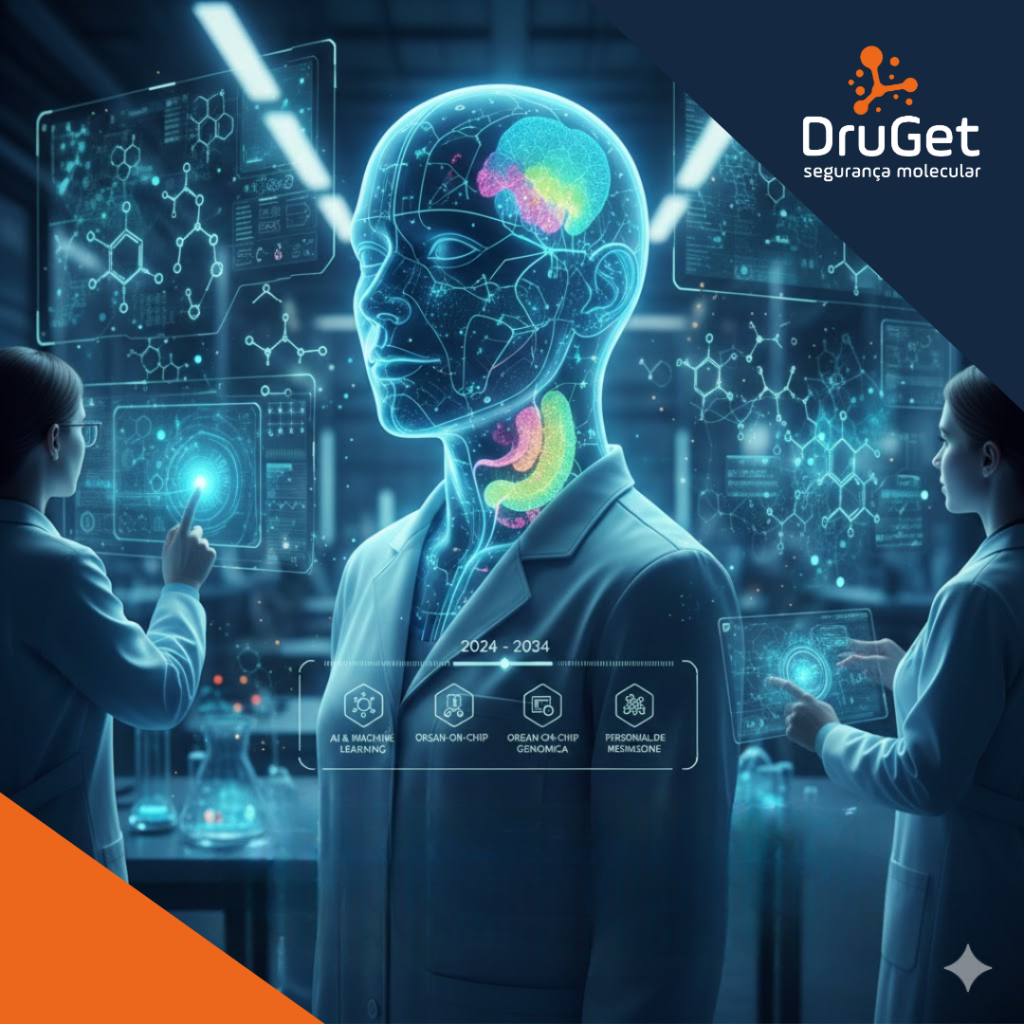
Currently, predictive toxicology—positioned at the strategic intersection of biology, data science, and Artificial Intelligence (AI)—has evolved from a promising concept into a cornerstone of modern chemical safety. Over the next decade, however, the field will not merely expand; instead, it will fundamentally transform how risks are assessed and how molecules are prioritized, from early discovery to market approval.
Given this context, understanding the evolution of predictive toxicology is essential. Below, we highlight the five key trends that are expected to shape the field through 2034.
1. AI and Machine Learning in Chemical Safety: from big data to automated decision-making
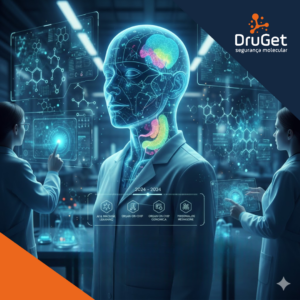
First and foremost, the driving force behind AI-based predictive toxicology lies in its ability to process massive datasets efficiently. While traditional toxicological approaches may take years to generate actionable insights, machine learning models can analyze chemical structures, biological endpoints, and clinical data within seconds.
As a result, toxicity prediction becomes faster and significantly more accurate. Consequently, reliance on in vivo testing is substantially reduced. Moreover, deep neural networks and Next Generation Risk Assessment (NGRA) platforms are already automating the identification of adverse effects even before the first chemical synthesis occurs.
2. Omics Data and Mechanism-Based Risk Assessment
Today, the frontier of predictive toxicology is no longer limited to determining whether a compound is toxic. Instead, the focus has shifted toward understanding why toxicity occurs at the molecular level. In this respect, the integration of genomics, transcriptomics, and metabolomics enables real-time visualization of biological perturbations.
Furthermore, quantitative in vitro–in vivo extrapolation (QIVIVE) models strengthen toxicity prediction by translating cellular responses into human-relevant exposure scenarios. Consequently, mechanisms of action that remain hidden in conventional animal models can now be systematically uncovered.
3. Regulatory Acceptance of Computational Models
Historically, animal testing served as the gold standard in toxicology. However, predictive toxicology is progressively replacing these models due to ethical concerns, scientific limitations, and regulatory pressure.
Aligned with OECD guidelines and New Approach Methodologies (NAMs), modern toxicity prediction increasingly relies on in silico simulations and advanced in vitro systems, such as organ-on-a-chip technologies. Therefore, chemical safety assessment is becoming more reproducible, human-relevant, and ethically responsible.
4. Market expansion of AI-driven predictive toxicology
Market data strongly support this transformation. The global predictive toxicology market, particularly solutions powered by AI, is experiencing rapid growth driven by the need to minimize late-stage failures.
In addition, pharmaceutical, cosmetic, and agrochemical industries are increasingly adopting computational toxicity prediction to reduce development costs while simultaneously accelerating time-to-market without compromising regulatory compliance.
5. Regulatory and scientific challenges in predictive toxicology
Despite these advances, the full consolidation of predictive toxicology depends on overcoming several critical challenges:
- Data standardization in predictive toxicology: Since toxicity prediction models are only as reliable as the data used to train them, rigorous data curation and standardized datasets are essential.
- Regulatory validation of toxicity prediction: Regulatory agencies such as FDA, EMA, and ANVISA require robust validation frameworks before accepting in silico methods as regulatory standards.
- Model interpretability in predictive toxicology: Importantly, accurate predictions alone are insufficient. Regulators and scientists must also understand the biological rationale behind each prediction, thereby eliminating the “black-box” effect.
Final considerations on the future of predictive toxicology
In conclusion, the convergence of Artificial Intelligence, big data, and omics technologies firmly positions predictive toxicology as a central pillar of chemical and pharmaceutical safety assessment. Consequently, toxicity prediction becomes faster, more ethical, and more cost-effective.
Ultimately, we are entering a new era of molecular safety, in which intelligent algorithms and advanced biological models work together to protect human health more efficiently, sustainably, and responsibly.