Drug stability studies play a fundamental role in pharmaceutical development. They ensure that medicines maintain their quality, safety, and efficacy throughout storage and their intended shelf life. Traditionally, these studies rely on laboratory experiments that may take months—or even years—to generate reliable results, requiring significant investments in infrastructure, materials, and specialized personnel.
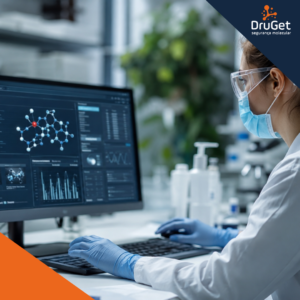
However, this landscape is rapidly changing. Artificial intelligence (AI) is transforming the way researchers evaluate the stability of new drug candidates. Instead of relying exclusively on experimental studies, research teams can now use computational models to predict the behavior of molecules before the first laboratory experiments begin.
Moreover, the continuous growth of chemical and pharmaceutical databases, combined with advances in computing power, has enabled the development of increasingly accurate predictive models. These tools analyze thousands of molecular structures simultaneously, identify complex patterns, and estimate how compounds will behave under different environmental and storage conditions.
As a result, artificial intelligence reduces development time, lowers research costs, and provides valuable insights that support decision-making during the early stages of drug development.
How Artificial Intelligence Is Transforming Drug Stability Studies
Drug stability is influenced by several factors, including temperature, humidity, light exposure, oxidation, pH, and interactions among formulation components. Changes in any of these factors may compromise product quality, reduce shelf life, and ultimately affect patient safety.
Historically, identifying these issues depended almost entirely on accelerated and long-term stability studies. Although these experiments remain essential for regulatory compliance, they require considerable time, financial resources, and laboratory effort.
In this context, artificial intelligence has emerged as a powerful complementary tool. Rather than replacing laboratory experiments, AI enables researchers to anticipate results and focus experimental work on the most promising drug candidates.
Machine learning algorithms analyze molecular structures, physicochemical properties, molecular descriptors, and previously published experimental data. They then identify patterns associated with chemical degradation and estimate how compounds are likely to behave under different stress conditions.
Furthermore, these models process far more information than conventional statistical methods. Consequently, researchers obtain faster predictions supported by large and diverse datasets, improving both efficiency and confidence in the results.
Another important advantage is the early identification of potential risks. When a predictive model indicates a high probability of degradation or incompatibility with specific excipients, researchers can modify the molecular structure, optimize the formulation, or select alternative compounds before investing in complex laboratory studies.
As a result, pharmaceutical research becomes more efficient, reducing rework while increasing the probability of success throughout the drug development process.
Why Use Artificial Intelligence in Drug Stability?
Artificial intelligence offers significant advantages across virtually every stage of pharmaceutical research and development.
Some of its main benefits include:
- reducing the time required for early-stage stability assessments;
- lowering research and development (R&D) costs;
- identifying unstable drug candidates at an early stage;
- improving the selection of promising compounds;
- predicting incompatibilities between active pharmaceutical ingredients (APIs) and excipients;
- supporting the design of more stable formulations;
- enabling faster and more informed scientific decision-making.
In addition, predictive models allow researchers to concentrate laboratory resources on compounds with the highest probability of success. This strategy minimizes unnecessary experiments, reduces costs, and accelerates pharmaceutical innovation.
Another important advantage is the integration of artificial intelligence with other in silico methodologies, including molecular modeling, computational chemistry, and predictive toxicology. Together, these approaches provide a comprehensive understanding of candidate molecules before synthesis or experimental testing.
Looking ahead, artificial intelligence is expected to evolve from a supportive technology into a strategic component of the entire drug development pipeline, from early drug discovery to formulation optimization and pharmaceutical manufacturing.
Artificial Intelligence Models Used in Drug Stability Prediction
Recent advances in artificial intelligence have led to the development of powerful algorithms capable of analyzing large volumes of chemical and pharmaceutical data with remarkable accuracy. These models learn patterns from experimental datasets and apply this knowledge to predict the behavior of new drug candidates before laboratory testing.
In pharmaceutical research, different machine learning and deep learning techniques support the prediction of chemical stability, degradation pathways, and formulation performance. The choice of algorithm depends on the available data, the complexity of the problem, and the specific objectives of each study.
Artificial Neural Networks (ANN)
Artificial Neural Networks (ANN) are among the most widely used machine learning models for predicting chemical and pharmaceutical properties. Inspired by the structure of the human brain, ANNs learn complex, nonlinear relationships between molecular features and experimental outcomes.
In drug stability studies, these models analyze molecular descriptors, physicochemical properties, and experimental data to estimate how compounds behave under different storage conditions. Moreover, their predictive performance improves as additional high-quality data become available for training.
Because of their flexibility, ANNs have been successfully applied to predict degradation behavior, physicochemical properties, and formulation performance across a wide range of pharmaceutical compounds.
Support Vector Machines (SVM)
Support Vector Machines (SVM) are well-established algorithms for both classification and regression tasks. They perform particularly well when datasets contain many variables but relatively few observations, a common scenario in pharmaceutical research.
In drug stability prediction, SVM models estimate properties such as chemical stability, solubility, and degradation potential. Furthermore, they help classify compounds according to their likelihood of remaining stable under specific environmental conditions, allowing researchers to prioritize the most promising candidates for experimental validation.
Random Forest and Gradient Boosting
Random Forest and Gradient Boosting are ensemble learning methods based on decision trees. Instead of relying on a single predictive model, these algorithms combine multiple trees to improve accuracy and reduce prediction errors.
One of their main strengths is the ability to identify which variables have the greatest influence on model predictions. Consequently, researchers can better understand the molecular and formulation factors associated with instability.
In addition, these algorithms are highly robust and generally perform well even when experimental datasets contain missing values or substantial variability.
Deep Learning
The rapid expansion of pharmaceutical and chemical databases has accelerated the adoption of deep learning in drug discovery and development. Unlike traditional machine learning algorithms, deep neural networks automatically learn complex representations directly from raw data, minimizing the need for manual feature engineering.
As a result, deep learning models capture subtle relationships between molecular structure and chemical stability that might otherwise remain undetected. Consequently, they often achieve higher predictive accuracy, particularly when large datasets are available.
These capabilities make deep learning especially valuable for predicting degradation behavior, physicochemical properties, and formulation stability during the early stages of pharmaceutical development.
Graph Neural Networks (GNN)
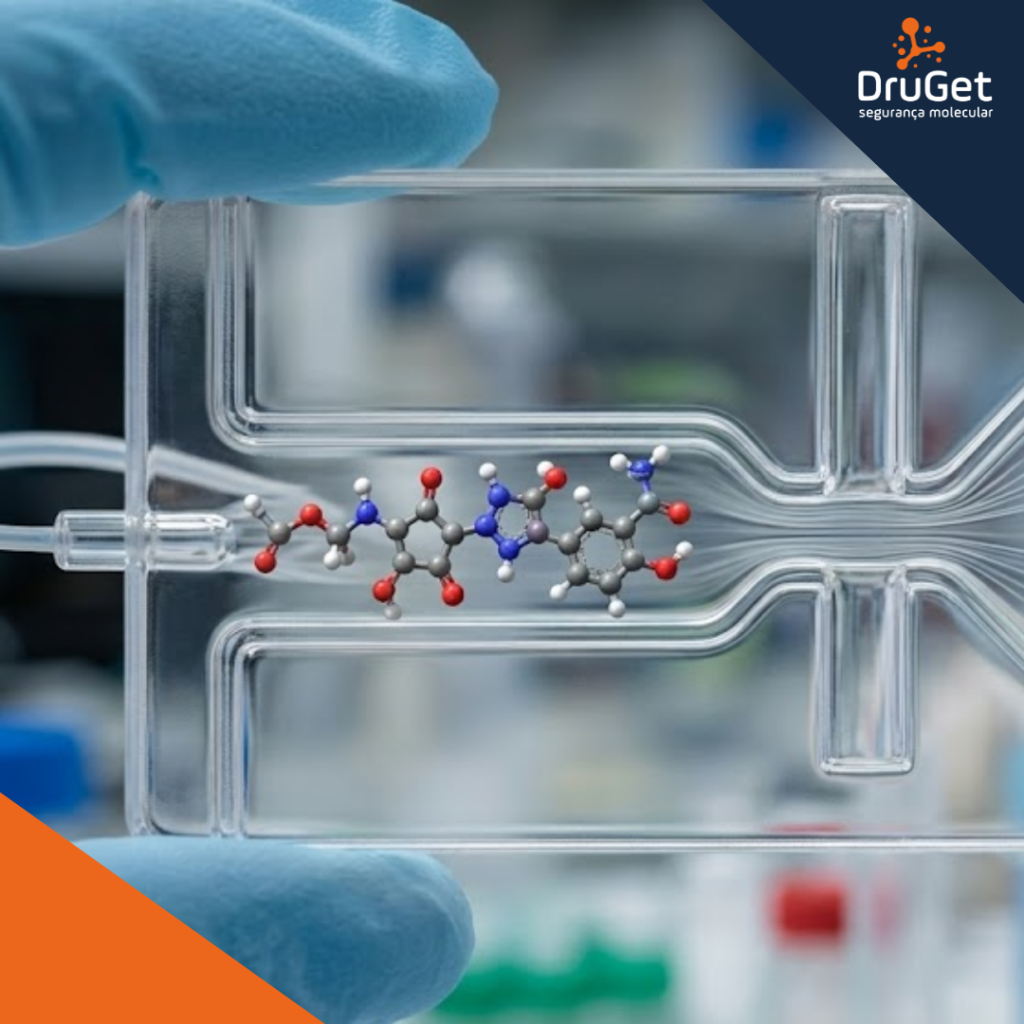
Among the most promising technologies in computational chemistry are Graph Neural Networks (GNNs). Unlike conventional models that represent molecules as numerical descriptors, GNNs treat each molecule as a graph composed of atoms connected by chemical bonds.
This representation preserves the structural relationships within the molecule and enables the algorithm to learn directly from its chemical architecture. As a result, GNNs have demonstrated outstanding performance in predicting molecular properties, degradation pathways, stability, and drug-like characteristics.
Because of these advantages, GNNs are increasingly incorporated into modern drug discovery platforms and are considered one of the most important innovations in AI-driven medicinal chemistry.
Transformer-Based Models
Another major breakthrough is the application of Transformer architectures, originally developed for natural language processing, to computational chemistry.
These models analyze textual molecular representations, such as SMILES strings, and learn chemical patterns from millions of compounds. This capability allows them to predict molecular properties with exceptional accuracy.
State-of-the-art models, including ChemBERTa, MolBERT, and other foundation models for chemistry, have shown remarkable performance in predicting toxicity, molecular properties, pharmacokinetic parameters, and chemical stability.
Furthermore, because these models are pre-trained on massive chemical datasets, they can be efficiently adapted to a wide variety of pharmaceutical applications through transfer learning.
Combining Multiple AI Models Improves Prediction Accuracy
In practice, no single artificial intelligence model can solve every challenge associated with drug stability. For this reason, many pharmaceutical companies and computational platforms combine multiple machine learning approaches within a single predictive workflow.
For example, one algorithm may excel at predicting physicochemical properties, while another provides more accurate estimates of degradation pathways or formulation performance. Integrating these complementary models leads to more reliable predictions and a broader understanding of molecular behavior.
Moreover, combining artificial intelligence with computational chemistry, molecular modeling, and experimental data enables researchers to make better-informed decisions throughout drug development.
As computational methods continue to evolve, integrated AI platforms are expected to become essential tools for accelerating pharmaceutical research, reducing development costs, and improving the quality of drug candidates before laboratory validation.
Applications of Artificial Intelligence in Drug Stability Prediction
Artificial intelligence has become an essential component of modern pharmaceutical research and development. Today, AI-driven models support scientists throughout the drug development pipeline, from early candidate selection to formulation optimization and shelf-life prediction.
Moreover, these computational tools analyze vast amounts of chemical and pharmaceutical data within minutes, enabling researchers to identify potential risks and promising opportunities long before laboratory experiments begin. As a result, artificial intelligence reduces uncertainty, accelerates decision-making, and improves the overall efficiency of pharmaceutical development.
Predicting Degradation Pathways
One of the most valuable applications of artificial intelligence is the prediction of drug degradation pathways.
By analyzing a compound’s molecular structure, AI models can identify chemical bonds that are most susceptible to hydrolysis, oxidation, photolysis, thermal degradation, or other degradation mechanisms. In addition, these algorithms can predict the degradation products likely to form under specific storage or manufacturing conditions.
This information enables researchers to identify potential stability issues during the earliest stages of drug development. Consequently, scientists can modify the molecular structure, optimize formulation parameters, select appropriate antioxidants, or implement protective strategies against light and moisture before initiating extensive laboratory studies.
Predicting Degradation Kinetics
Beyond identifying how a molecule may degrade, artificial intelligence can also estimate how quickly degradation is likely to occur.
Machine learning models analyze historical stability data and forced degradation studies to estimate degradation rates under different environmental conditions. Consequently, researchers gain valuable insights into the expected behavior of pharmaceutical compounds over time.
Although these computational predictions do not replace regulatory stability studies, they provide important guidance during formulation development and experimental planning.
Estimating Shelf Life
Determining a drug product’s shelf life is one of the primary objectives of pharmaceutical stability studies. Traditionally, this process requires long-term storage studies that may extend over many months or even years.
Artificial intelligence significantly accelerates this process by integrating experimental data, physicochemical properties, molecular descriptors, and predictive mathematical models.
As a result, researchers can estimate product stability under different storage conditions, evaluate packaging strategies, and prioritize formulation candidates before initiating long-term stability testing.
Predicting Drug–Excipient Compatibility
Drug stability depends not only on the active pharmaceutical ingredient (API) but also on the interactions between the API and formulation excipients.
Artificial intelligence provides an efficient approach for evaluating these interactions early in development. Predictive models identify combinations that may promote undesirable chemical reactions, alter physicochemical properties, or reduce formulation stability.
Consequently, formulation scientists can eliminate unsuitable excipients before laboratory testing, reducing experimental workload while increasing the likelihood of developing robust pharmaceutical products.
Supporting Forced Degradation Studies
Forced degradation studies are essential for understanding how pharmaceutical compounds respond to extreme stress conditions, including elevated temperatures, high humidity, oxidative environments, light exposure, and pH variations.
Although these experiments remain indispensable for regulatory submissions, artificial intelligence can substantially improve their design.
By analyzing molecular structures and previous experimental data, AI models help identify the stress conditions most likely to generate relevant degradation products. Therefore, researchers can design more targeted experiments and obtain meaningful results more efficiently.
Optimizing Pharmaceutical Formulations
Artificial intelligence also plays a key role in formulation development.
Modern AI models simultaneously evaluate molecular characteristics, excipient properties, manufacturing parameters, and physicochemical interactions to identify formulations with the highest probability of long-term stability.
Furthermore, these computational tools allow researchers to simulate multiple formulation scenarios before producing the first experimental batches. Consequently, development teams can focus laboratory resources on the most promising formulations, reducing both costs and development time.
Integrating Artificial Intelligence with Quality by Design (QbD)
In recent years, artificial intelligence has become increasingly integrated into Quality by Design (QbD) strategies.
Within the QbD framework, AI algorithms analyze critical quality attributes (CQAs), critical material attributes (CMAs), and critical process parameters (CPPs) to identify factors that may affect product stability and overall quality.
Moreover, combining artificial intelligence with statistical modeling and experimental design enables a deeper understanding of pharmaceutical processes. As a result, manufacturers can reduce process variability, improve product consistency, and strengthen quality assurance throughout development and manufacturing.
Artificial Intelligence as a Decision-Support Tool
Despite its remarkable capabilities, artificial intelligence is not intended to replace experimental studies or scientific expertise.
Instead, AI serves as a powerful decision-support tool that helps researchers interpret complex datasets, identify meaningful patterns, and prioritize experiments with the highest probability of success.
As additional experimental data become available, predictive models continue to improve through continuous learning. Consequently, the integration of artificial intelligence, computational chemistry, and pharmaceutical sciences is expected to play an increasingly important role in developing safer, more effective, and higher-quality medicines.
Benefits of Artificial Intelligence for the Pharmaceutical Industry
The integration of artificial intelligence into pharmaceutical stability studies offers benefits that extend far beyond task automation. In practice, AI enables a faster, more cost-effective, and data-driven drug development process while supporting better scientific and strategic decisions.
Furthermore, by combining artificial intelligence with computational chemistry, molecular modeling, and predictive analytics, researchers can identify potential stability issues during the earliest stages of development. Consequently, pharmaceutical companies can reduce costs, minimize project risks, and improve the probability of clinical and commercial success.
Accelerating Drug Development
Bringing a new drug to market typically requires more than a decade of research and development. Stability studies alone may take months or years to generate the data required for regulatory approval.
Artificial intelligence helps shorten this timeline by rapidly analyzing thousands of molecular structures and predicting their stability under various environmental conditions. As a result, researchers can prioritize the most promising candidates while reducing the number of unnecessary laboratory experiments.
Although experimental validation remains essential, AI significantly streamlines early-stage decision-making and allows development teams to focus their resources more efficiently.
Reducing Research and Development Costs
Research and development (R&D) represents one of the largest investments in pharmaceutical innovation. Discovering that a promising drug candidate has poor stability late in development can lead to substantial financial losses.
Artificial intelligence addresses this challenge by identifying potential stability risks before costly experimental studies begin. Consequently, organizations can avoid investing in compounds with a low probability of success and allocate resources to candidates with stronger development potential.
This strategy reflects the widely adopted “fail fast, fail cheap” philosophy, which emphasizes identifying problems as early as possible to minimize time, cost, and resource consumption.
Developing More Robust Formulations
Drug stability depends on numerous factors, including the physicochemical properties of the active pharmaceutical ingredient (API), excipient compatibility, manufacturing conditions, and packaging materials.
Artificial intelligence enables researchers to evaluate multiple formulation scenarios before producing experimental batches.
Moreover, predictive models identify the variables that have the greatest impact on product stability. This allows formulation scientists to optimize compositions more efficiently and increase the likelihood of developing robust pharmaceutical products.
Supporting Better Scientific Decision-Making
Modern pharmaceutical research generates enormous amounts of experimental, chemical, and biological data. Extracting meaningful insights from these datasets is often a significant challenge.
Artificial intelligence addresses this problem by integrating molecular information, physicochemical properties, experimental results, and scientific literature into predictive models that support evidence-based decision-making.
Instead of evaluating isolated variables, researchers gain a comprehensive understanding of molecular behavior. Consequently, they can compare alternative strategies, identify critical factors, and prioritize experiments with greater confidence.
Improving Quality Control
Artificial intelligence also contributes to pharmaceutical manufacturing and quality assurance.
Predictive models continuously analyze manufacturing parameters, identify deviations from expected process conditions, and detect patterns associated with product instability or quality defects. As a result, manufacturers can implement corrective actions before failures occur, improving batch consistency and reducing production losses.
These capabilities also strengthen Quality by Design (QbD) initiatives and modern risk-based quality management systems, both of which are increasingly emphasized by regulatory agencies worldwide.
Challenges of Artificial Intelligence in Drug Stability Prediction
Despite its tremendous potential, artificial intelligence still faces important scientific and regulatory challenges.
One of the most significant limitations is the availability of high-quality training data. Machine learning models require large, diverse, and well-curated datasets to generate reliable predictions. If the training data are incomplete, inconsistent, or biased, model performance may decline considerably.
Additionally, pharmaceutical laboratories often use different experimental protocols, analytical methods, and reporting standards. This variability complicates data integration and may reduce the generalizability of predictive models.
Another challenge involves model interpretability. While advanced deep learning algorithms frequently achieve outstanding predictive performance, they often function as “black boxes,” making it difficult to understand how individual predictions are generated.
For this reason, researchers are increasingly investing in Explainable Artificial Intelligence (XAI). XAI techniques aim to improve model transparency by providing interpretable explanations that support scientific understanding and regulatory confidence.
Regulatory acceptance also remains an evolving area. Although agencies recognize the growing value of artificial intelligence as a decision-support technology, experimental validation continues to be essential for demonstrating drug quality, safety, and efficacy.
Future Perspectives
Artificial intelligence is expected to play an even greater role in pharmaceutical research over the coming years.
One of the most promising developments is the continued advancement of Graph Neural Networks (GNNs) and Transformer-based models, which provide increasingly accurate representations of molecular structures and enable more reliable predictions of chemical stability.
At the same time, the emergence of foundation models trained on millions of chemical structures is transforming computational drug discovery. These large-scale models can be adapted to numerous pharmaceutical applications, including stability prediction, toxicity assessment, pharmacokinetic modeling, and lead optimization.
Another important trend is the integration of artificial intelligence with automated laboratories and self-driving experimentation platforms. In these environments, AI algorithms continuously analyze experimental results, recommend subsequent experiments, and optimize research strategies in real time.
Furthermore, the rapid expansion of publicly available chemical and pharmaceutical databases will continue improving model performance and reliability.
As these technologies mature, artificial intelligence is expected to become an integral component of the pharmaceutical development pipeline, supporting every stage from early drug discovery and formulation development to manufacturing, quality control, and post-market surveillance.
How DruGet Applies Artificial Intelligence to Drug Stability Prediction
At DruGet, we believe that artificial intelligence is a strategic tool for accelerating drug development and supporting more informed scientific decisions. Our approach combines computational methods, molecular analysis, and predictive modeling to help research teams identify risks, optimize candidates, and generate valuable insights during the early stages of pharmaceutical development.
Our platform integrates advanced computational approaches, including artificial intelligence, machine learning, and molecular modeling, to evaluate molecular properties and predict potential challenges related to drug development. These analyses support the identification of structural alerts, physicochemical characteristics, degradation risks, and factors that may influence formulation performance.
Furthermore, in silico approaches allow researchers to prioritize candidates with greater development potential before investing in extensive experimental studies. As a result, pharmaceutical companies, biotechnology startups, research institutions, and universities can reduce costs, optimize laboratory efforts, and accelerate innovation.
Although experimental validation remains essential, the combination of artificial intelligence and computational approaches creates a more efficient research workflow. By integrating predictive models with scientific expertise, researchers can make faster and more reliable decisions throughout the drug development process.
The Future of Pharmaceutical Stability Studies
Artificial intelligence is transforming how medicines are discovered, developed, and evaluated. As computational models become increasingly sophisticated and chemical databases continue to expand, researchers gain unprecedented opportunities to predict drug behavior before extensive laboratory testing.
Moreover, advances in Deep Learning, Graph Neural Networks (GNNs), and Transformer-based models are improving the ability to understand complex relationships between molecular structures, physicochemical properties, and drug stability.
At the same time, the integration of artificial intelligence with computational chemistry and experimental sciences is creating a more efficient, sustainable, and data-driven pharmaceutical development ecosystem.
Rather than replacing laboratory research, AI enhances scientific decision-making by helping researchers interpret complex datasets, prioritize experiments, and reduce uncertainty during development.
Conclusion
Drug stability studies remain essential for ensuring the quality, safety, and efficacy of pharmaceutical products. However, the way these studies are planned and conducted is undergoing a significant transformation.
Artificial intelligence enables researchers to predict degradation mechanisms, evaluate formulation performance, identify stability risks, and support strategic decisions before extensive experimental testing begins. Consequently, pharmaceutical teams can reduce development costs, optimize resources, and focus efforts on the most promising candidates.
Despite ongoing challenges related to data quality, model transparency, and regulatory validation, recent advances demonstrate that artificial intelligence will play an increasingly important role in pharmaceutical research.
The convergence of artificial intelligence, computational chemistry, and experimental science represents a new era of drug development—one that is faster, more efficient, and guided by high-quality scientific data.
For organizations seeking to accelerate pharmaceutical innovation, integrating artificial intelligence into research workflows provides an opportunity to improve decision-making, reduce development risks, and create safer and more effective medicines.
How Can DruGet Support Your Drug Development Projects?
DruGet provides computational solutions based on artificial intelligence and molecular modeling to support pharmaceutical research and development.
Our predictive analyses help identify potential risks, evaluate molecular properties, and generate strategic insights that assist researchers in making faster and more informed decisions.
By combining scientific expertise with advanced computational technologies, DruGet helps organizations accelerate innovation and develop safer, more efficient pharmaceutical products.
Contact our team to discover how artificial intelligence can support your next drug development project.
l and Reproductive Toxicity of Cosmetic Ingredients. 2025.