Artificial intelligence in cosmetics is transforming the way products are developed, evaluated, and brought to market. Moreover, far beyond product personalization and consumer trend analysis, AI has assumed a strategic role in toxicological safety, the development of more efficient formulations, and the reduction of reliance on animal testing.
Furthermore, in response to increasing regulatory pressure and the growing demand for safer and more sustainable products, companies in the cosmetic sector have adopted advanced computational models, machine learning, and predictive toxicology to accelerate innovation without compromising human health or the environment.
How Artificial Intelligence in Cosmetics Is Redefining Safety
Historically, the safety assessment of cosmetic ingredients relied on lengthy experimental processes, many of which involved in vivo testing. However, international regulations, particularly those in the European Union, have driven the adoption of alternative methods known as NAMs (New Approach Methodologies), which include in vitro, in silico, and AI-based approaches.
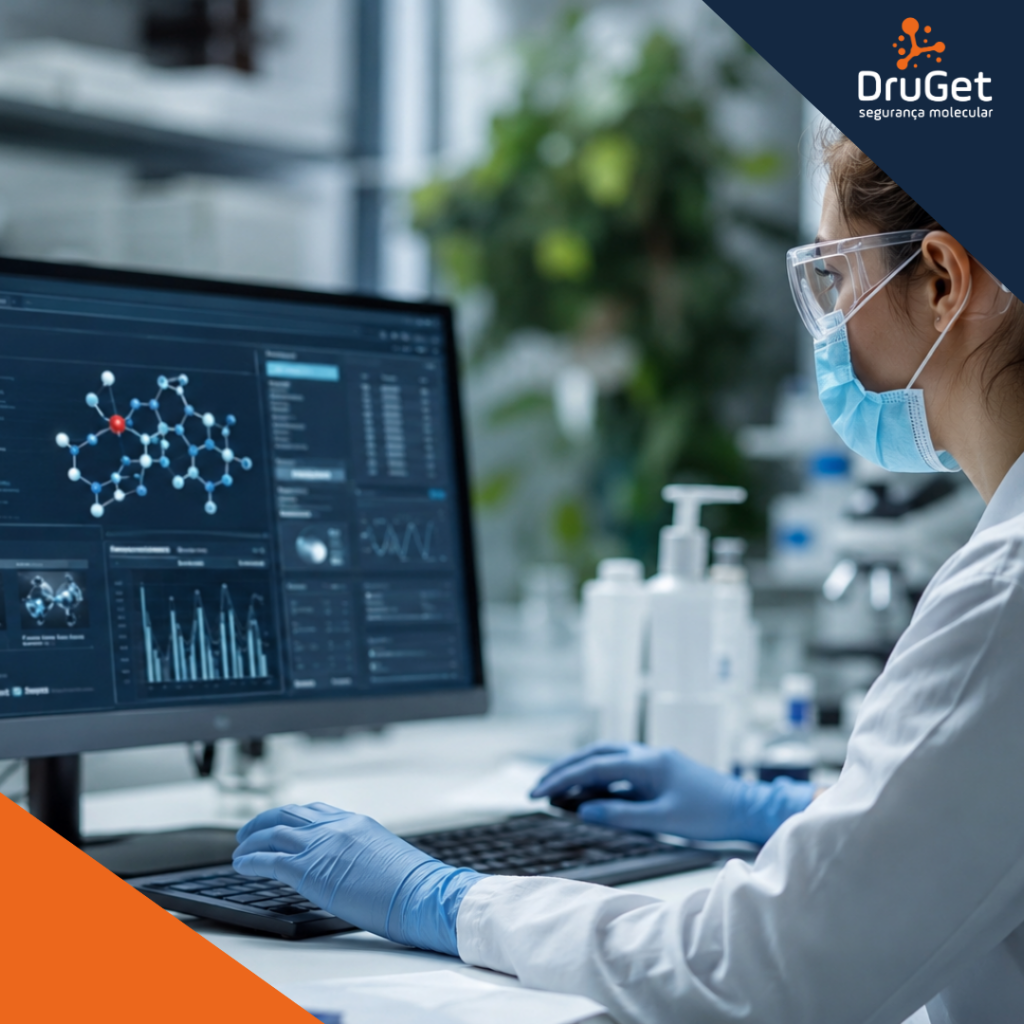
In this context, artificial intelligence in cosmetics has become a powerful ally in predicting toxicity, skin sensitization, eye irritation, chemical stability, and even potential interactions between ingredients before a formulation reaches the laboratory stage.
In addition, according to Kleinstreuer and colleagues, machine learning models can analyze extensive toxicological databases and predict chemical hazards with high efficiency, directly contributing to the advancement of so-called predictive toxicology.
Applications of Artificial Intelligence in Cosmetics
Toxicological Prediction of Ingredients
Currently, one of the most relevant applications of artificial intelligence in cosmetics is predictive safety assessment.
In this regard, algorithms trained on extensive toxicological datasets can identify molecular patterns associated with adverse effects, such as:
- skin sensitization;
- cytotoxicity;
- phototoxicity;
- allergenic potential;
- environmental toxicity.
For example, these models employ approaches such as QSAR (Quantitative Structure–Activity Relationship) and deep learning techniques to predict risks before an ingredient is synthesized or incorporated into a formulation.
Moreover, this strategy reduces development costs and timelines. Consequently, compounds with higher toxic potential can be eliminated early in the process, following the “fail fast, fail cheap” principle applied to cosmetic R&D.
More Stable and Effective Formulations
Likewise, artificial intelligence has been used to predict physicochemical stability and compatibility among ingredients.
In addition, computational systems can analyze thousands of possible combinations and identify the most promising formulations in terms of:
- viscosity;
- texture;
- oxidative stability;
- shelf life;
- skin permeation;
- product sensory properties.
Furthermore, a recent article published in the journal Cosmetics highlighted that AI models are already capable of predicting critical properties of surfactants, antioxidants, preservatives, and fragrances. As a result, the development of safer and more effective dermocosmetic products becomes faster and more accurate.
How Artificial Intelligence in Cosmetics Reduces Animal Testing
The ban on animal testing for cosmetics in several countries has accelerated the need for robust alternative methods. Against this backdrop, artificial intelligence plays a central role in integrating toxicological data and developing predictive models capable of replacing a significant portion of traditional testing approaches.
The so-called NAMs combine different technologies, including:
- bioinformatics;
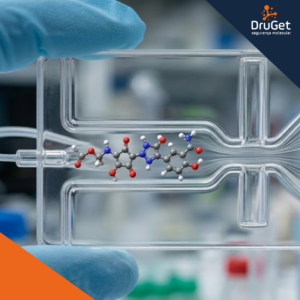
- organ-on-a-chip systems;
- reconstructed tissues;
- computational toxicology;
- artificial intelligence.
Thus, this integration has been considered one of the most promising strategies for improving cosmetic safety without the use of animals.
AI-Based Cosmetic Personalization
Another growing trend is the use of artificial intelligence to personalize cosmetic products. Applications and digital platforms can analyze skin characteristics through images, dermatological history, and environmental factors to recommend formulations tailored to each individual user.
However, although this technology represents an important advancement, experts warn about challenges related to data quality, algorithmic bias, and clinical validation.
For instance, models trained on insufficiently diverse populations may generate inappropriate recommendations for different skin phototypes and dermatological conditions.
Ethical and Regulatory Challenges of AI in Cosmetics
Despite its enormous potential, the use of AI in the cosmetic sector still faces significant challenges, including:
- the need for algorithm transparency;
- regulatory validation;
- model reproducibility;
- consumer data protection;
- reduction of biases in databases.
Moreover, regulatory agencies and researchers have emphasized that AI should serve as a complementary tool to traditional scientific assessment rather than a complete substitute for human expertise.
Similarly, the reliability of these models depends directly on the quality of the data used during training, reinforcing the importance of robust and well-curated toxicological databases.
The Future of Intelligent Cosmetology
The trend is for artificial intelligence in cosmetics to become increasingly integrated into product development, enabling:
- safer formulations;
- reduced R&D timelines;
- lower development costs;
- greater sustainability;
- large-scale personalization;
- improved regulatory compliance.
Finally, the convergence of artificial intelligence, computational toxicology, and biotechnology is redefining how cosmetics are developed and evaluated. More than simply accelerating processes, artificial intelligence in cosmetics is contributing to a safer, more ethical, and data-driven industry.
How DruGet Can Contribute to Cosmetic Safety
The adoption of computational toxicology and artificial intelligence tools enables companies in the cosmetic sector to make faster, scientifically grounded decisions. In this regard, DruGet provides predictive solutions for safety assessment, early identification of toxicological risks, and support for regulatory compliance.
As a result, companies can develop safer, more sustainable cosmetic products aligned with current regulatory requirements.
References
Kania B, et al. Artificial intelligence in cosmetic dermatology. J Cosmet Dermatol. 2024.
Elder A, et al. Artificial intelligence in cosmetic dermatology: An update on current applications and future directions. Dermatol Surg. 2024.
Thunga S, et al. AI in Aesthetic/Cosmetic Dermatology: Current and Future. 2025.
Di Guardo A, et al. Artificial Intelligence in Cosmetic Formulation: Predictive Modeling for Safety, Tolerability, and Regulatory Perspectives. Cosmetics. 2025.
Kleinstreuer N, et al. Artificial intelligence (AI)—it’s the end of the tox as we know it. Frontiers in Toxicology. 2024.
Sewell F, et al. New approach methodologies (NAMs): identifying and overcoming barriers to regulatory acceptance. 2024.
Wang M, et al. Applications of Engineered Skin Tissue for Cosmetic Safety Evaluation. 2024.
Burbank M, et al. New approach methodologies for evaluating developmental and reproductive toxicity of cosmetic ingredients. 2025.