The journey from a promising molecule to an approved drug is long, expensive, and highly uncertain. On average, drug development takes 10 to 15 years and can cost billions of dollars. Moreover, nearly 90% of clinical candidates fail before reaching the market.
Given this scenario, a critical question arises: how can companies reduce risk and improve efficiency in pharmaceutical R&D?
In this context, computational pipelines (in silico modeling) have become essential tools. They enable early risk prediction, support better decision-making, and significantly improve molecular safety from the earliest stages of development.
The “fail fast, fail cheap” approach in pharmaceutical R&D
Today, pharmaceutical innovation is not only about finding the right molecule. Instead, it is about eliminating the wrong ones as early as possible.
This concept, known as fail fast, fail cheap, focuses on identifying failures quickly, thereby reducing costs and avoiding unnecessary investment.
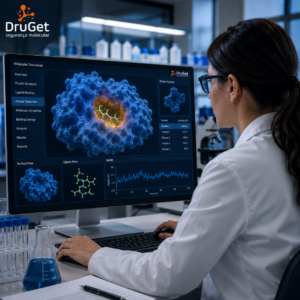
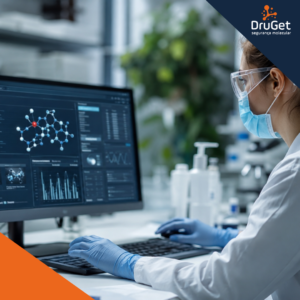
Computational pipelines play a key role in this strategy. By leveraging artificial intelligence, advanced algorithms, and molecular simulations, they can evaluate thousands of compounds in a short time.
As a result, researchers can rapidly answer critical questions, such as:
- Does the molecule have affinity for the biological target?
- Is the interaction stable over time?
- Does the compound present a safe biological profile?
Therefore, more informed decisions can be made even before chemical synthesis begins.
ADMET prediction: the core of molecular safety
One of the most decisive factors in drug development success is the ADMET profile — absorption, distribution, metabolism, excretion, and toxicity.
Traditionally, these evaluations were performed in later stages, often leading to the rejection of compounds after significant investment.
However, computational pipelines now integrate ADMET prediction at the early hit-to-lead stage.
Consequently, researchers can predict key risks, including:
- Hepatotoxicity (liver damage)
- Cardiotoxicity (hERG channel interactions)
- Mutagenicity (DNA damage potential)
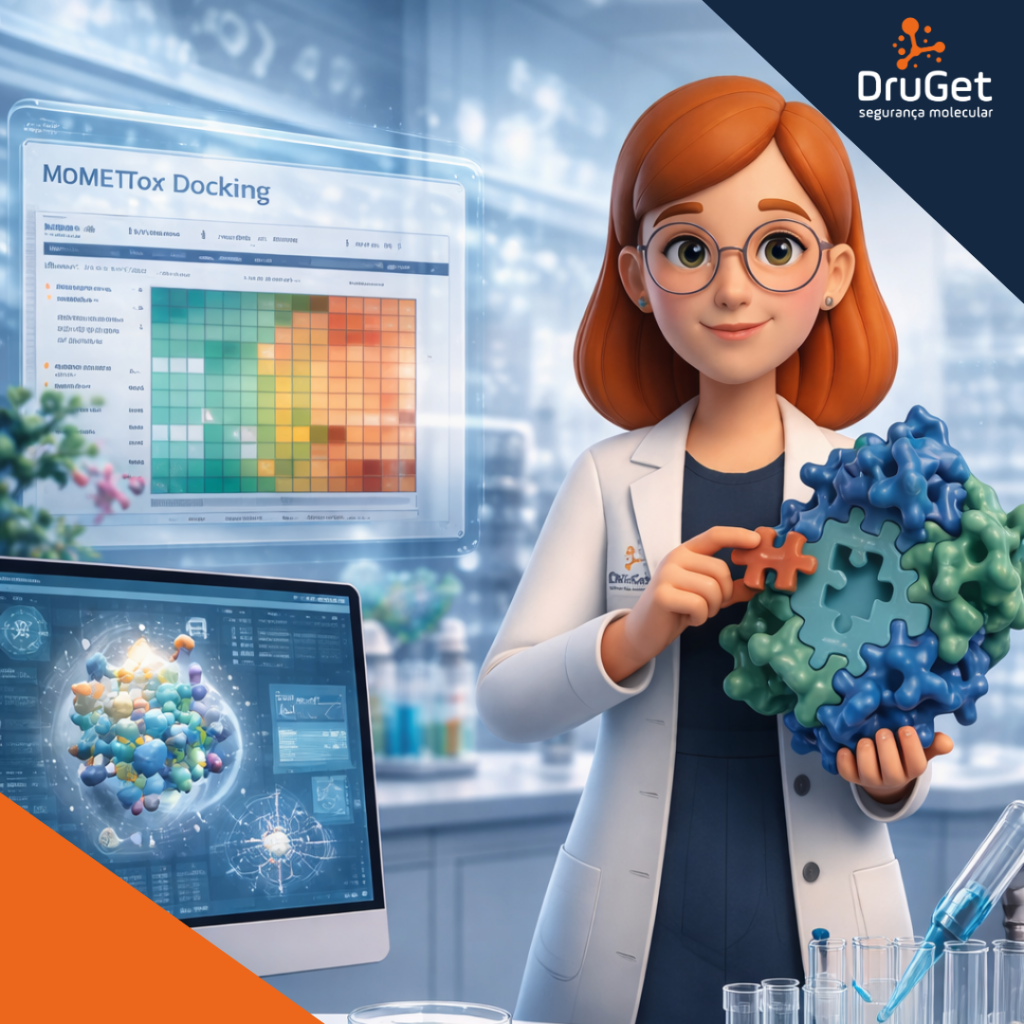
In addition, data visualization techniques such as clustering and heatmaps allow scientists to quickly identify risk patterns across compound libraries.
Thus, only the most promising and safest molecules are prioritized for experimental validation.
Artificial intelligence driving next-generation pipelines
With the advancement of artificial intelligence, particularly machine learning and deep learning, computational pipelines have evolved significantly.
Today, these systems not only evaluate existing compounds but also generate entirely new molecules through de novo design.
This approach enables the creation of compounds optimized for:
- Target affinity
- Reduced toxicological risk
- Improved pharmacokinetic profiles
Furthermore, recent studies indicate that AI-driven strategies can reduce preclinical discovery timelines by months or even years.
Integrating computational and experimental approaches
Despite these advances, computational methods do not replace experimental validation.
On the contrary, the most effective strategy is the integration of in silico predictions with high-quality laboratory testing.
In this hybrid model, computational pipelines act as an initial filter, while experimental assays confirm the results.
As a result, organizations can reduce uncertainty, optimize resources, and increase the likelihood of clinical success.
Key benefits of computational pipelines in drug development
The adoption of computational pipelines provides several strategic advantages:
- Risk reduction: early identification of unsafe compounds
- Cost efficiency: lower investment in non-viable candidates
- Faster development: accelerated decision-making
- Improved safety: prioritization of low-risk molecules
Additionally, these approaches support more sustainable and ethical R&D practices.
Conclusion: data-driven decisions for safer innovation
In today’s highly competitive and complex landscape, ignoring computational pipelines is no longer a viable option.
By transforming data into actionable insights, these tools enable faster, safer, and more strategic decisions.
Ultimately, the future of pharmaceutical R&D lies in the integration of data science, artificial intelligence, and experimental validation.
At DruGet, we apply these technologies to anticipate risks and accelerate the development of safer, more effective compounds.